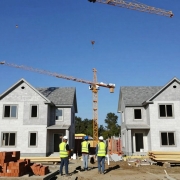

UK Construction Sector Faces Growing Pressure from Housing Slowdown
The UK construction industry is facing renewed pressure as the housing market continues to stall, highlighting major concerns for contractors, developers, and suppliers across the sector.
Recent data shared by Noble Francis, Economics Director at the Construction Products Association, paints a concerning picture: housing activity remains one of the weakest-performing areas of the UK economy, with both private housing and repair, maintenance, and improvement (RMI) sectors seeing persistent declines.
📉 The Scale of the Slowdown
While the wider construction sector has shown signs of resilience in infrastructure and industrial projects, the housing slowdown is dragging on overall growth. Developers have scaled back new starts as high mortgage rates, tighter lending criteria, and declining affordability continue to dampen buyer demand.


Many regional housebuilders are now delaying projects or reducing the scope of planned developments. The decline in repair and improvement work also suggests that households remain cautious, opting to delay major refurbishments amid continued cost-of-living pressures.
💡 A Shifting Construction Landscape
Although private housing is struggling, other areas of construction have provided partial relief. Infrastructure investment—particularly in energy, water, and transport projects—has remained steady, offering some support for overall sector output.


However, even this diversification may not be enough to offset the broader slowdown. Many firms are now reassessing their forecasts for 2025–2026, anticipating continued uncertainty in planning pipelines and client investment confidence.
🏠 The Broader Economic Impact
A slowdown in construction has ripple effects far beyond building sites. The UK’s housing supply gap could widen further if reduced construction output persists through 2025. This would likely intensify affordability challenges for renters and first-time buyers.
In parallel, a weaker pipeline affects material suppliers, logistics providers, and local trades—many of whom rely on consistent project activity to remain viable.
Visualisation 3:
Insert infographic: “Impact of Housing Slowdown on the Wider Construction Supply Chain”
🔍 Outlook for 2025 and Beyond
Industry analysts believe that stability in interest rates and increased government support for affordable housing could help reignite activity later in 2025. The key will be rebuilding confidence among both developers and consumers.
Yet, with persistent inflationary pressures, labour shortages, and regulatory uncertainty still in play, many construction firms face a difficult balancing act between survival and long-term investment.
🧱 Summary
The UK construction industry’s recovery remains uneven. While infrastructure continues to perform strongly, the housing market’s weakness is now a defining constraint for sector-wide growth.
Unless significant policy or market shifts occur, the housing drag could continue well into 2026—reshaping the priorities of developers, contractors, and policymakers alike.
📚 Sources
-
Noble Francis, LinkedIn Post (October 2025) – View Original Post
-
Construction Products Association (CPA) – Industry Forecasts 2025
-
Office for National Statistics (ONS) – Construction Output Data, Q3 2025
-
Bank of England – Mortgage and Housing Market Report, 2025