
Office building of collapsed construction firm Harry Fairclough

Warrington HQ of Collapsed Construction Firm Harry Fairclough Set for Sale

The former headquarters of the historic construction firm Harry Fairclough, based in Warrington, is set to be sold off by administrators. The company, which had a significant presence in civil engineering and building projects for over 120 years, entered administration and subsequently liquidation, leading to the redundancy of around 150 employees.

Key Takeaways

  • The Warrington headquarters of collapsed construction firm Harry Fairclough is being sold.
  • The company entered administration in February last year, leading to around 150 job losses.
  • The 1.4-acre site is expected to be redeveloped for housing.
  • Administrators aim to maximise realisations for creditors.

Sale Of The Warrington Headquarters

Administrators Smith and Williamson have confirmed the sale of the freehold premises located off Howley Lane, which fronts the River Mersey. The 1.4-acre site, which has been marketed for the past 12 months, has attracted a mix of conditional and unconditional offers. The sale is intended to maximise the funds available to the creditors of Harry Fairclough Limited.

Company’s Demise And Impact

Harry Fairclough Limited, founded in 1898, specialised in civil contracts and also had a division for building projects for private and public sector clients. The firm entered administration in February of the previous year, with around 150 employees made redundant from its Warrington headquarters and West Yorkshire office. The company’s collapse was reportedly blamed on late and non-paying customers. At the time of its demise, the firm had undertaken projects such as a lion enclosure at Chester Zoo and work on extensions for Blackpool Sixth Form College.

Future Of The Site

The sale of the Howley Lane site is expected to pave the way for new housing development. Savills, which handled the sale, noted that the transaction underscores a growing confidence in the regional property market and strong demand for development land, even amidst broader market uncertainties. This positive outlook suggests potential for increased land values and mainstream house prices in the area.

Legal Action From Former Employees

Following the company’s collapse, a number of former employees have reportedly sought legal action. Law firm Simpson Millar stated it had begun investigations after receiving calls from ex-employees regarding the redundancy process. The firm was looking to secure a ‘Protective Award’ on behalf of employees, which is a payment awarded by an employment tribunal when an employer fails to properly consult staff during mass redundancies. Such awards can be accessed via the Government Insolvency Service.

Sources

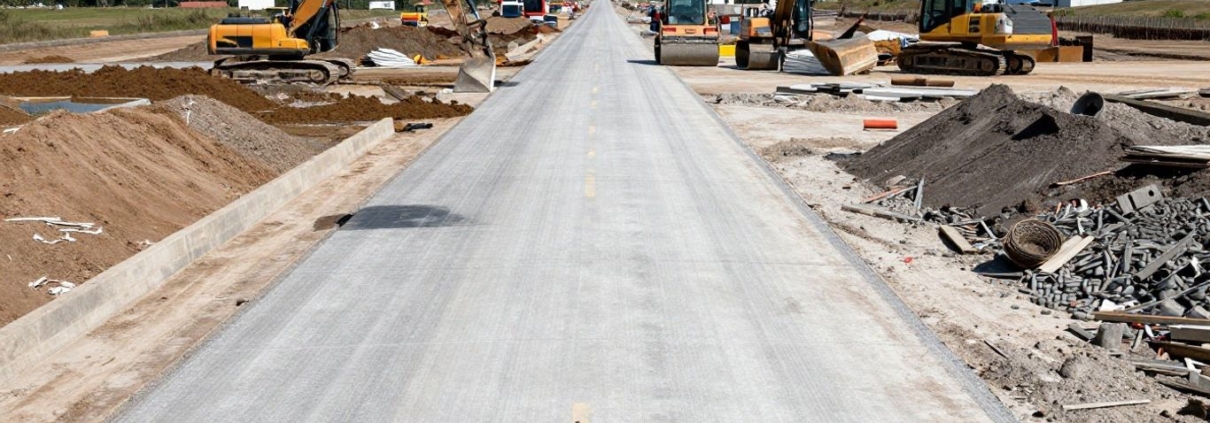
New concrete road construction with heavy machinery.

£1 Billion Deal Awarded for Major Concrete Road Overhaul Across England

A consortium has secured a significant £1 billion deal to reconstruct England’s aging concrete road network. The “Legacy Concrete Roads Reconstruction” framework, awarded by National Highways, will span from 2026 to 2032, marking a substantial shift from patch repairs to wholesale replacement of these vital routes.

Key Takeaways

  • A £1 billion framework has been awarded for the reconstruction of legacy concrete roads in England.
  • The initiative will run from 2026 to 2032, covering RIS3 and the start of RIS4.
  • The focus is on full reconstruction rather than repairs, doubling previous planned spend.
  • Modern, quieter, and more resilient road surfaces will be implemented.
  • Sustainability and circular economy practices, including recycling, are core components.

A New Era For Road Reconstruction

National Highways has identified approximately 400 miles of its Strategic Road Network, primarily built in the 1960s and 1970s, as “legacy” concrete carriageways. These sections, concentrated in the eastern parts of England, are among the most maintenance-intensive. The new framework represents a significant strategic pivot, moving away from the lifecycle extension and repairs that characterised the previous £400 million arrangement.

Scope Of Works

The comprehensive scope of the “Legacy Concrete Roads Reconstruction” framework includes the demolition of existing concrete pavements, full reconstruction, installation of new pavement furniture and markings, and upgrades to hardened central reserves. Contractors will also be responsible for temporary traffic management, acting as principal designer and contractor under CDM 2015 regulations, and providing carbon capture reporting. A key emphasis will be placed on the recovery, recycling, and reuse of materials, aligning with National Highways’ commitment to lower-carbon renewals and circular economy principles.

Industry Collaboration And Future Vision

Companies like Kier Infrastructure and Sisk Infrastructure have expressed enthusiasm for their roles in this vital project. James Birch, managing director for transportation at Kier Infrastructure, highlighted the “integrated design and build expertise” and the opportunity to “play a key role in delivering essential upgrades.” Alan Rodger, Managing Director Sisk Infrastructure, looks forward to continuing a “long-standing relationship with National Highways” and collaborating with framework partners and the local supply chain.

Nick Knorr, head of the National Concrete Roads Programme, stated that the replacement of aging concrete roads with modern designs will ensure “smoother, quieter, and more resilient routes for millions of people.” This next phase, delivered in partnership with the supply chain, aims to bring lasting improvements to communities and businesses across England.

Sources

Construction and engineering training bodies merging.

Construction and Engineering Training Bodies Face Potential Merger Following Government Review

The UK government is set to launch a 12-week public consultation on the potential merger of the Construction Industry Training Board (CITB) and the Engineering Construction Industry Training Board (ECITB). This move follows an independent review that highlighted the need for greater collaboration and a strengthened role for industry training bodies in addressing critical skills gaps within the construction and engineering sectors.

Key Takeaways

  • A government consultation will commence this month on merging CITB and ECITB.
  • An independent review recommended a “fundamental reset” and a single, rebranded body.
  • The review identified significant skills challenges and proposed 63 recommendations.
  • Both training boards have already increased collaboration on key projects.

Review Highlights Need for Consolidation

An independent review, finalised in early 2025, assessed the effectiveness of both the ECITB and CITB. It concluded that while these Industry Training Boards (ITBs) play a vital role in addressing skills needs, their effectiveness could be significantly enhanced through a unified approach. The review proposed merging the two organisations into a single, rebranded body tasked with improving workforce capacity, capability, and resilience across both sectors. It also stressed the importance of retaining the levy-grant model but recommended a refocused strategy with clearer Key Performance Indicators (KPIs) to drive measurable outcomes.

Enhanced Collaboration Underway

In anticipation of the review’s findings and to address common workforce challenges, the CITB and ECITB have been increasing their collaboration over the past year. Joint workstreams have focused on areas such as infrastructure development, increasing the number of trainers and assessors, clean energy job creation, and skills passporting. Examples include strategic skills planning for major projects like Sizewell C, where training pathways are being developed to span both civil construction and engineering construction phases.

Industry Response and Future Outlook

Andrew Hockey, CEO of ECITB, emphasised the critical role of both industries in meeting government growth and clean energy targets, noting the forecast need for 40,000 additional workers in engineering construction by 2030. He stressed that any structural changes should not detract from the immediate need to attract and retain skilled workers. Tim Balcon, CEO of CITB, welcomed the review’s recognition of the skills challenges and highlighted the industry’s vital contribution to the wider economy. He added that the CITB is already implementing many of the report’s recommendations through its strategic plan and is committed to working collaboratively to meet industry needs.

Government’s Next Steps

The government has confirmed it will launch a 12-week consultation to gather further input on the proposed merger. While the review recommended a single body, the Department for Education has stated it currently has no plans to legislate for such a merger but will work with the ITBs and other government departments to implement many of the report’s recommendations over the coming year. A steering group will be established to oversee the implementation of all recommendations.

Sources

Bristol Airport terminal expansion construction site with cranes.

Bristol Airport Unveils Ambitious £30m Terminal Expansion Led by Farrans

Bristol Airport has officially broken ground on a major £30 million extension of its terminal, a move set to boost passenger capacity and modernise the travel experience. Awarded to contractor Farrans, the project marks the airport’s latest phase in a wider, transformative development plan.

Key Takeaways

  • £30m two-floor extension to boost annual passenger capacity to 12 million
  • 45% increase in floor space, with 17 new shops and restaurants, taking the total to 38 outlets
  • Enhanced arrivals area, improved immigration access, and expanded baggage reclaim
  • Project completed in a live airport environment, aiming to minimise disruption
  • Up to 150 jobs created during peak construction, with emphasis on local suppliers

Transforming the Passenger Experience

The extension comes as part of Bristol Airport’s long-term vision to become a premier regional hub. Once complete, passengers will find an almost 45% increase in terminal floor space, including an array of new premium food and retail brands. The number of retail and dining options will nearly double with 17 additional units, including a unique hidden speakeasy bar for travellers seeking something different.

Improved Facilities for Arrivals and Departures

Arrivals will see significant upgrades, such as a new domestic baggage reclaim area with an additional carousel, supporting a 20% uplift in capacity. The immigration area will also be improved with new lifts and stairs, enhancing accessibility and reducing congestion for incoming passengers.

Innovative Construction in a Live Environment

Farrans, who previously delivered the successful Public Transport Interchange in 2025, is deploying innovative construction techniques to maintain passenger flow with minimal disruption. Notably, a modular Bailey Bridge will enable vehicles and equipment to cross safely from landside to airside, while insulated hoardings and air-locked spaces ensure routes remain accessible.

Supporting the Local Economy

At the height of the build, the project will support up to 150 jobs, many sourced from local suppliers. The airport’s commitment extends beyond construction, with ongoing investment in sustainable transport infrastructure, including improved bus, coach, and pedestrian access.

A Broader Vision For Growth

This extension is a significant step in Bristol Airport’s ambitious £400 million upgrade programme, with a broader master plan aiming to raise capacity to 15 million passengers and enhance access to the South West and South Wales regions. Recent transport improvements and future plans, such as a proposed mass transit link to Bristol city centre, underpin the airport’s vision of remaining at the forefront of regional connectivity and service.

The £30 million terminal upgrade signals a bold new era for Bristol Airport, promising travellers more choice, greater comfort, and a smoother journey for years to come.

Sources

Construction boss banned after Covid loan fraud.

Construction Boss Faces Six-Year Ban After £150,000 Covid Loan Fraud

A construction firm director has been disqualified from acting as a company director for six years after fraudulently obtaining £150,000 in Covid Bounce Back Loans. Adebanjo Adebayo Talabi, 42, was sentenced at Southwark Crown Court after admitting to three counts of fraud by false representation. He received a suspended prison sentence and was ordered to complete unpaid work as part of his punishment.

Key Takeaways

  • Adebanjo Adebayo Talabi, director of Bebo Construction Ltd, fraudulently claimed three Covid Bounce Back Loans totalling £150,000.
  • He exaggerated the company’s turnover to secure the maximum loan amount on each occasion.
  • Talabi has been banned from being a company director for six years and received a suspended prison sentence.
  • The Insolvency Service is continuing to pursue individuals who exploited the government’s pandemic support schemes.

Fraudulent Loan Applications

Adebanjo Adebayo Talabi, formerly the director of London-based Bebo Construction Ltd, applied for three separate Covid Bounce Back Loans between August and November 2020. The loans, each for the maximum available amount of £50,000, totalled £150,000. An investigation by the Insolvency Service (IS) revealed that Bebo Construction Ltd would have only been entitled to a single loan of approximately £1,300 based on its actual turnover.

Exaggerated Turnover and Misrepresentation

During the application process, Talabi significantly inflated the company’s turnover, stating it was between £200,000 and £220,000 to justify the loan amounts. For the second and third loan applications, he falsely claimed they were the first and only applications made by the company. Evidence gathered by the IS indicated that the loan funds were transferred to personal accounts rather than being used for the economic benefit of the company, a key condition of the Bounce Back Loan scheme.

Sentencing and Consequences

Talabi pleaded guilty to three counts of fraud by false representation and was sentenced on February 24, 2026. He received a two-year prison sentence, suspended for two years, and was ordered to undertake 200 hours of unpaid work. In addition to these penalties, he has been disqualified from acting as a company director for a period of six years.

David Snasdell, chief investigator at the Insolvency Service, commented on the sentence, stating it imposes significant long-term restrictions on Talabi. He also highlighted the IS’s commitment to prosecuting those who exploited the pandemic relief schemes. The IS will not be pursuing action under the Proceeds of Crime Act, as Talabi has already begun repaying the money owed.

Sources

Modern green industrial park construction site in Cheadle.

UK’s Greenest Light-Industrial Park Underway in Cheadle

Work has commenced on the Cheadle Eco Park, a ground breaking £25 million development poised to become one of the UK’s most sustainable light-industrial parks. Located in Cheadle Heath, Stockport, the project aims to set new benchmarks in environmental performance for industrial buildings.

Key Takeaways

  • The Cheadle Eco Park is designed to achieve BREEAM Outstanding certification, placing it in the top 1% of UK non-residential buildings for sustainability.
  • It will be the UK’s largest purpose-built industrial and logistics development to feature a structure made entirely from sustainably sourced timber.
  • The project is supported by a £4.4 million grant from the government’s Town Fund and is slated for completion in March 2027.

A New Standard in Sustainable Industrial Development

Caddick Construction has officially begun work on the Cheadle Eco Park, a significant industrial development for Stockport Council. The seven-acre site will feature six light industrial units, ranging from 8,374 sq ft to 43,800 sq ft, collectively spanning 115,000 sq ft. These new units will replace older industrial buildings on the site.

The park’s design, by AEW Architects, prioritises exceptional environmental standards. It is engineered to achieve Building Research Establishment Environmental Assessment Method (BREEAM) Outstanding certification, a testament to its commitment to sustainability. This places Cheadle Eco Park among the top 1% of non-residential buildings in the UK for environmental performance.

Innovative Green Technologies

Sustainability is at the core of the Cheadle Eco Park’s design. The development will incorporate advanced technologies such as air source heat pumps, natural ventilation systems, and smart, energy-efficient lighting. These features are intended to help the park achieve an Energy Performance Certificate (EPC) rating of A, signifying maximum energy efficiency.

A key distinguishing feature of the Cheadle Eco Park is its construction material. It is set to be the UK’s largest purpose-built industrial and logistics development utilising a structure constructed entirely from sustainably sourced timber. This choice over traditional steel frames significantly reduces embodied carbon, a critical factor in mitigating the environmental impact of construction.

Investment and Future Outlook

The scheme, which benefits from a £4.4 million grant from the government’s Town Fund, is scheduled for completion in March 2027. Network Space Developments is managing the project on behalf of Stockport Council, the landowner.

David Saville, northwest managing director at Caddick Construction, highlighted the project’s importance, stating, “Breaking ground at Cheadle Eco Park marks a hugely important moment not just for Stockport, but for the future of sustainable industrial development across the region.” He added that the company is proud to be delivering “one of the UK’s greenest industrial parks, built to exceptional environmental standards and designed to support the next generation of low-carbon businesses.”

Brian Bradley, chair of the Cheadle Towns Fund Board, echoed this sentiment, calling the start of work “a major step forward in delivering one of the UK’s most advanced and environmentally ambitious light industrial developments.” He emphasised the scheme’s role in investing in Cheadle’s economic future, promising high-quality jobs, support for clean growth industries, and the creation of a modern, sustainable employment destination.

Sources

Building materials with a red warning sticker.

Stricter Penalties for Unsafe Building Products Announced Post-Grenfell

New legislation is set to introduce significantly harsher penalties for companies and individuals involved with unsafe and unregulated building products. This move, detailed in a government white paper, aims to create a more robust regime and prevent future tragedies like Grenfell.

Key Takeaways

  • Prison sentences, unlimited fines, and director disqualifications are among the proposed sanctions.
  • All construction products will be subject to mandatory checks under a new general safety requirement.
  • The reforms target weak oversight, competence, transparency in testing, and enforcement.

A New Era of Accountability

Building safety minister Samantha Dixon has unveiled proposals designed to overhaul the regulation of construction products. The “Construction Products White Paper” outlines a “robust regime” intended to address “weak institutional oversight, competence, rigour and transparency of testing and certification, inadequate product information and insufficient enforcement.” The government aims to close regulatory gaps and ensure accountability across the entire product chain.

Mandatory Checks and Robust Enforcement

Under the proposed reforms, all construction products, not just the current 37 per cent that are regulated, will face mandatory checks through a new general safety requirement. Enforcement will be strengthened with significant criminal penalties for non-compliance. Breaches could result in unlimited fines or imprisonment. The government is also consulting on the national regulator’s power to issue civil monetary penalties as an alternative to prosecution. Further sanctions, including director disqualification and the recouping of criminal proceeds, are also on the table.

Ten Pillars of Reform

The white paper details ten key measures to transform the sector:

  1. Mandatory requirements for all products.
  2. Additional controls for higher-risk products.
  3. Enhanced product information and transparency.
  4. Digitalisation and traceability.
  5. Strengthened testing and certification.
  6. Tougher enforcement and sanctions.
  7. Stronger routes to redress for affected parties.
  8. Sustainability and environmental alignment.
  9. Accountability and competence for all actors.
  10. Phased implementation to support SMEs and trade.

A 12-week consultation on these reforms is now open, with secondary legislation expected later this year. These changes are part of a broader effort to foster a “transformational cultural shift” within the construction industry, ensuring the safety of people and preventing costly remediation efforts.

Sources

Highland Council Appoints Four Contractors for £2.1bn Infrastructure Overhaul

Highland Council has selected four main contractors to spearhead the initial phase of its ambitious £2.1 billion Highland Investment Plan (HIP). This 20-year capital programme aims to modernise public infrastructure across the region, with the first tranche of projects focusing on creating community hubs.

Key Takeaways

  • Four contractors – Morgan Sindall, Morrison Construction, Robertson Group, and Ogilvie Construction – have been appointed.
  • The projects are part of the first phase of the £2.1bn Highland Investment Plan (HIP).
  • The initial projects include schools, offices, depots, and partner facilities combined into community hubs.
  • Highland Council is the client, with hub North Scotland acting as the delivery partner.

Major Infrastructure Investment Underway

The appointed contractors will deliver seven key projects spanning from Thurso to Inverness. These schemes are the first to reach the preferred contractor stage under the council’s Points of Delivery (PoDs) programme. This initiative consolidates various public facilities into integrated community hubs, enhancing local services and infrastructure.

Project Allocations

The initial projects and their awarded contractors are:

  • Morgan Sindall: Beauly Primary PoD and Charleston Academy PoD.
  • Robertson Group: Dingwall Primary PoD (including St Clements School) and Tornagrain Primary PoD.
  • Morrison Construction: Fortrose Academy PoD and Thurso PoD.
  • Ogilvie Construction: Inverness High School PoD.

Funding and Delivery

The HIP will be financed through a combination of capital investment and a dedicated annual allocation equivalent to 2% of ring-fenced council tax revenue. The council has committed £750 million for investment over the next five years as part of the broader £2.1 billion programme. The procurement route, while not explicitly detailed, suggests an early contractor engagement process, likely a two-stage approach under the hub North Scotland framework. This allows for early involvement in consultation, design development, and pre-planning activities.

Stakeholder Reactions

Council leader Raymond Bremner hailed the appointments as a “major milestone” that will drive long-term improvements to schools and community facilities. Council convener Bill Lobban indicated that the next steps involve further community engagement and detailed design. Glynis Sinclair, chair of the housing and property committee, highlighted the programme’s potential to support new homes and employment opportunities, including graduate and apprenticeship roles. Richard Park, chief executive of hub North Scotland, confirmed that design and delivery efforts are already in progress.

Contractors expressed enthusiasm for the collaboration. Gordon Williamson, managing director for Morrison Construction Building Highland, stated their commitment to developing plans for two new schools. Stuart Parker, managing director of Morgan Sindall Construction in Scotland, noted the appointments reflect the strength of their Inverness-based team. Elliot Robertson, CEO of Robertson Construction Group, confirmed their team’s collaboration on the Dingwall and Tornagrain projects, while Martin Poole, preconstruction director at Ogilvie Construction, outlined their role in delivering the Inverness High School building.

Sources

Construction site with cranes and workers in the Midlands.

Midlands Construction Boom: Subcontractors Urgently Needed for Regional Projects

The Midlands region is experiencing a significant surge in construction activity, leading to a high demand for skilled subcontractors. Numerous projects are underway or planned across various sectors, creating substantial opportunities for tradespeople and specialist firms. This expansion signals a robust period for the construction industry in the heart of the UK.

Key Takeaways

  • A growing number of construction projects are launching across the Midlands.
  • There is a pressing need for a diverse range of subcontractors.
  • This presents a significant opportunity for skilled trades and specialist firms.

Opportunities Abound

The construction sector in the Midlands is gearing up for a busy period, with a wide array of projects requiring specialised skills. From infrastructure upgrades to new commercial and residential developments, the demand for reliable and experienced subcontractors is at an all-time high. This presents a golden opportunity for businesses looking to expand their portfolio and secure lucrative contracts.

Diverse Project Landscape

Projects span across multiple areas, including:

  • Infrastructure: Road improvements, public transport enhancements, and utility works.
  • Commercial: New office buildings, retail spaces, and industrial units.
  • Residential: Housing developments and apartment complexes.

This diversity means that a broad spectrum of trades, from electricians and plumbers to bricklayers and groundworkers, will be in demand. Specialist services such as demolition, scaffolding, and surveying are also expected to see increased requirements.

Navigating the Demand

Construction firms operating in the Midlands are actively seeking to partner with competent subcontractors to ensure timely project completion and maintain high standards of quality. Companies are encouraged to highlight their expertise and track record to secure their place in this burgeoning market. The region’s strategic location and ongoing investment are driving this sustained growth, promising a dynamic environment for the foreseeable future.

Somerset Gigafactory construction site with cranes and buildings.

Somerset Gigafactory Reaches Major Construction Milestone

A significant construction milestone has been achieved at Agratas’ £4 billion gigafactory in Bridgwater, Somerset, marking a crucial step in the development of the UK’s largest electric vehicle battery manufacturing facility. The completion of the steel frame for ‘Building One’ signifies substantial progress for this landmark project, which is set to bolster the UK’s clean technology sector.

Key Takeaways

  • The steel frame for Agratas’ ‘Building One’ has been successfully erected.
  • The facility is poised to become the UK’s largest EV battery plant.
  • The project represents a £4 billion investment by Tata Group’s global battery business.
  • It is expected to create around 4,000 jobs and contribute significantly to the local economy.

Steel Frame Completion

Agratas, the global battery business of Tata Group, has announced the completion of the steel frame for its expansive battery manufacturing facility located in Bridgwater, Somerset. This structure, which forms the first phase of the project known as ‘Building One’, spans an impressive 525 metres in length, 167 metres in width, and reaches a height of 34 metres at its peak. The construction utilized 23,000 tonnes of steel, an amount equivalent to that used in Wembley Stadium, with 100 per cent of the steel sourced from the UK.

Project Significance and Economic Impact

This milestone is a critical step towards bringing the facility to life and underscores the project’s momentum. The gigafactory is designed to produce battery cells for both automotive use and energy storage, playing a vital role in advancing clean technology and sustainable energy solutions in the UK. Industry minister Chris McDonald highlighted the site’s importance in the nation’s clean energy transition and the Modern Industrial Strategy. Once fully operational, the facility is projected to create approximately 4,000 jobs and inject over £700 million in annual economic value into the South West region.

Next Steps and Job Creation

The completion of the steel frame paves the way for subsequent construction phases, including the installation of external cladding and roofing, followed by the internal fit-out. Recruitment efforts are ongoing, with plans to employ around 1,600 people to support battery production in the coming year. Positions will span operations, maintenance, quality control, technical, engineering, and logistics functions. The project is being delivered by Agratas’ construction partner, Sir Robert McAlpine, in collaboration with steel contractor Severfield and the design and engineering team at Stantec.

Timeline and Development

Construction work on the multi-billion-pound project commenced in 2024. While initial plans aimed for completion of ‘Building One’ in 2026, recent information suggests a revised target of 2027 for its completion. The project also involves significant infrastructure development, including a new junction on the M5 motorway, contracted to Costain Group.

Sources