Tag Archive for: Technology Trends

Liverpool Street Station concourse with trains and passengers.

Liverpool Street Station Redevelopment Decision Postponed as Network Rail Re-evaluates Project

Network Rail has announced a delay in the decision-making process for the proposed redevelopment of Liverpool Street Station. The £1 billion project, which has faced significant public and heritage body opposition, is now undergoing a thorough re-evaluation. Originally expected to reach a planning committee by the end of this year, the decision has been pushed back to spring, with the project team working to address concerns and present a revised, more heritage-sensitive plan.

Key Takeaways

  • The planning decision for Network Rail’s £1 billion Liverpool Street Station redevelopment has been delayed until spring.
  • The project, initially designed by Herzog & de Meuron and later by Acme, has faced substantial public and heritage objections.
  • Network Rail is re-evaluating the scheme, aiming for a design that is more sympathetic to the station’s listed status.
  • The revised plans focus on improving passenger capacity and experience while respecting the historical architecture.

Project History and Public Opposition

The redevelopment of Liverpool Street Station has been a contentious issue since its initial proposals were revealed. The original £1.5 billion plan, designed by Herzog & de Meuron and developed with Sellar, faced widespread criticism for its perceived negative impact on the grade II-listed station and the adjacent grade II*-listed Great Eastern Hotel. This led to over 2,200 objections from the public and strong opposition from heritage groups like Historic England.

Shift to a New Design Approach

In response to the significant backlash, Network Rail scrapped the initial plans and appointed Acme as the lead architect for a revised scheme. This new approach, valued at around £1 billion, aims to be more heritage-led. Key changes include scaling back the controversial office tower that was planned to cantilever over the hotel and focusing on retaining more of the existing station structure. The new design seeks to improve passenger flow, increase capacity, and enhance the station’s overall user experience, with a particular emphasis on respecting the historical context of the site.

Addressing Heritage and Capacity Concerns

The revised proposals are designed to be more sympathetic to the station’s Victorian architecture and the adjoining Great Eastern Hotel. Acme’s design avoids altering the listed hotel and focuses on redeveloping the 1980s and 1990s extensions. Network Rail has engaged in extensive consultations with heritage bodies and the public to ensure the new plans are well-received. Beyond aesthetic considerations, the redevelopment aims to address the station’s increasing passenger numbers, which have surged following the opening of the Elizabeth Line, making it the UK’s busiest station.

Sources

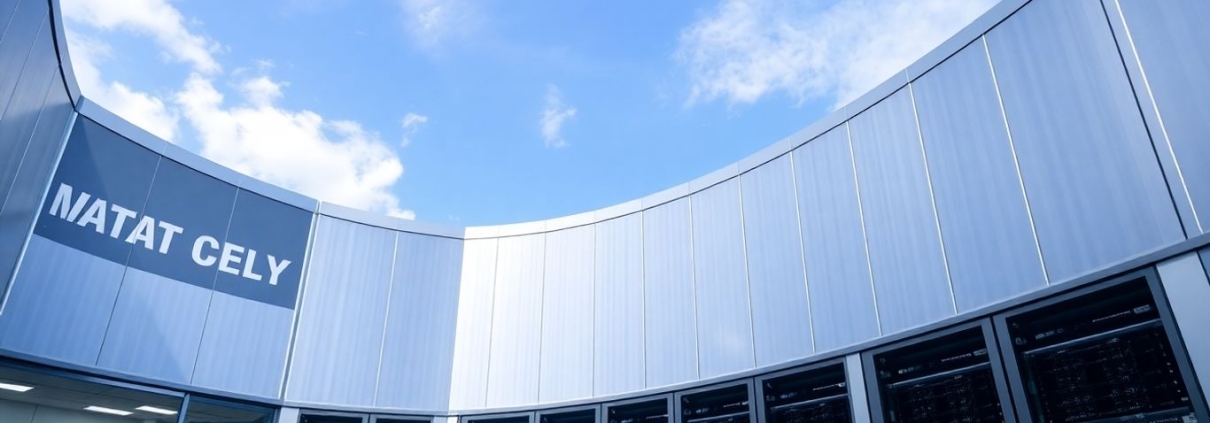
Amazon data centre in Buckinghamshire

Amazon Eyes Buckinghamshire for Massive New Data Centre

Amazon Web Services has submitted plans to construct a substantial 330,000 sq ft data centre in Iver, Buckinghamshire. This development is part of the tech giant’s significant investment in the UK’s digital infrastructure and positions Iver as a growing hub for the data centre sector.

Key Takeaways

  • Amazon plans a 330,000 sq ft, two-storey data centre in Iver, Buckinghamshire.
  • The project is part of an £8 billion UK data centre expansion by Amazon through 2028.
  • Construction is estimated to take 24-36 months, creating hundreds of jobs.
  • The facility will be designed for energy efficiency and align with Amazon’s net-zero carbon targets.

Proposed Development Details

The proposed facility, located at the Ridgeway Distribution Centre, involves the demolition of all existing structures to make way for a high-security, two-storey data centre. The design features twin stacked data halls, each 8.5 metres high, engineered for optimal energy efficiency and airflow. A lower-profile administration block will front the main entrance, while the northern side will house a generator yard with 27 backup units and 24-metre high exhaust stacks. The site will also include a substation compound, switchrooms, a medium-voltage building, sprinkler pump house, water tanks, diesel storage, and a bin store, all secured by 2.4-metre high fencing.

Economic Impact and Investment

This project is a component of Amazon’s broader £8 billion investment in UK data centres, scheduled to run until 2028. The company forecasts this expansion will contribute £14 billion to the UK’s GDP and generate over 14,000 full-time equivalent jobs annually across its supply chain. The construction phase alone is expected to create approximately 350 direct site jobs, with an additional 1,000 roles supported through the local supply chain over a 24 to 36-month construction period.

Sustainability and Design

Amazon has stated that the new data centre will align with its global net-zero carbon target for 2040. Furthermore, the company confirmed that all electricity used in its UK data centres has been matched with 100% renewable energy since 2023. The design team includes Dublin-based MCA Architects, civil and structural engineer Cronin & Sutton Consulting, M&E engineer Ethos, and high voltage consultant H&MV Engineering.

Broader Sector Growth

The development in Iver is indicative of a wider trend in the UK data centre market. This submission coincides with other significant deals in the sector, such as the sale of a South Mimms data centre site in Hertfordshire to Equinix, which is set to become one of Europe’s largest data centre developments.

Sources

Autonomous excavator building a car park at Manchester Airport.

UK’s First Autonomous Excavator Revolutionises Manchester Airport Car Park Construction

The UK has witnessed a significant leap in construction technology with the successful trial of the nation’s first autonomous excavator at Manchester Airport. Developed through a collaboration between robotics firm Gravis and contractor Taylor Woodrow, the AI-powered machine is set to transform how car parks and other infrastructure are built.

Key Takeaways

  • The UK’s first autonomous excavator, the SV100-7, has been trialled successfully.
  • The technology uses AI and 3D models to perform digging tasks with high precision.
  • It aims to improve safety, productivity, and address workforce shortages in the construction industry.
  • A qualified human operator will still oversee the machine’s operation.

The Autonomous Excavator In Action

The autonomous excavator, model SV100-7, operates using a sophisticated system mounted on the machine, linked to a tablet and camera. By uploading 3D or CAD models of the desired excavation, the excavator can automatically dig trenches to precise specifications, such as pipelaying standards. During trials, the machine demonstrated its ability to dig trenches without human intervention after the initial command was given, even navigating around pre-existing underground pipes.

Addressing Industry Challenges

Phil Skegg, managing director of Taylor Woodrow, highlighted the technology’s potential to combat persistent issues in the construction sector. “Over the last 10 years our industry safety record has not improved, and our productivity has declined,” he stated. “We believe that increasing the mechanisation and automation of the tasks we undertake on site will help address these problems, removing people from danger, being more productive and improving quality of workmanship.”

Advanced Technology and Safety Features

Gravis CEO Ryan Luke Johns explained the AI’s role in adapting to dynamic ground conditions. “A human does a very good job at adapting to those small nuances in the ground and that’s what we’re doing using AI,” he said. The system uses sensors and hydraulic feedback to understand and adapt to varying soil consistencies, including rocky or frozen ground. Real-time LiDAR mapping allows for precise excavation and autonomous manoeuvring. Crucially, the machine incorporates safety measures, including a safety shield solution with image recognition that triggers loud warnings if a person enters the machine’s proximity, allowing for immediate stops.

The Human Element Remains Crucial

Despite its autonomous capabilities, both Gravis and Taylor Woodrow emphasize that a qualified excavator operator will oversee the machine. This “computer control machine controller” is responsible for uploading models and initiating the digging process, ensuring a human remains in the loop for critical decisions and safety oversight.

Future Deployment

Following extensive trials and refinements over several weeks, the autonomous excavator is slated for deployment on a live construction site at Manchester Airport, specifically for the Clough Bank B car park project. Gravis anticipates the SV100-7 will move into commercial testing in 2026. Taylor Woodrow is also exploring other autonomous machinery, including a drilling robot at a site in Newcastle.

Sources

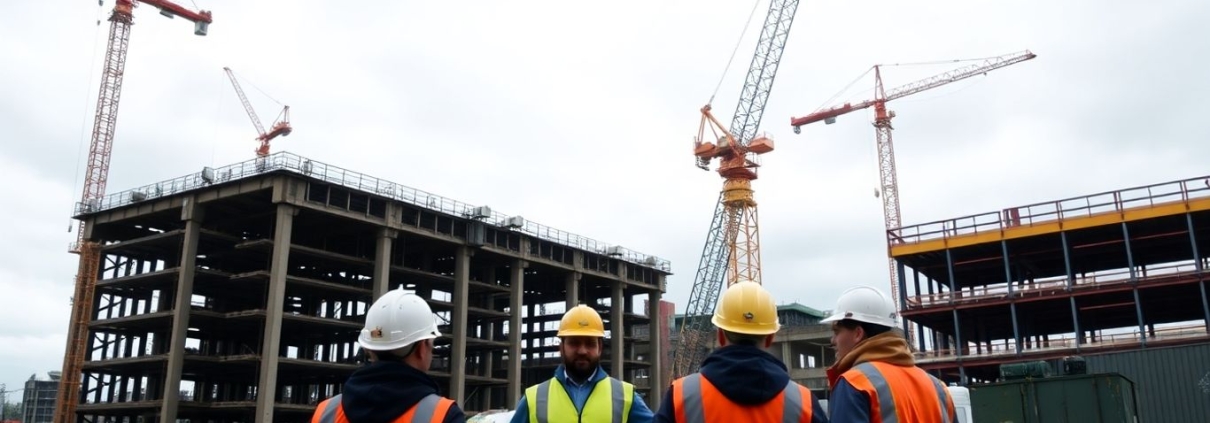
UK steelworkers at busy construction site with cranes

EU Steel Tariffs Threaten to Derail UK Construction and Steel Sector

The European Union’s recent proposal to double steel import tariffs and drastically reduce quota-free steel imports has sent shockwaves through the UK’s steel manufacturing and construction sectors. With most of the UK’s steel exports bound for the EU, industry leaders are warning of severe disruptions, delays to major projects, and potential existential threats to domestic steel producers.

Key Points

  • EU plans to increase out-of-quota steel tariffs to 50% while nearly halving tariff-free quotas
  • UK construction sector could see cost escalations and delays as a result
  • The UK government is under pressure to secure preferential treatment or specific quotas
  • Industry leaders fear a surge in diverted steel imports and job losses

Background to the EU Tariff Hikes

The European Commission has proposed raising steel tariffs applied to imports that exceed newly lowered quotas. Under the plan, tariff-free steel imports to the EU would be capped at around 18 million tonnes—a significant reduction from previous years—while out-of-quota shipments would be hit with a 50% duty. The move comes as the EU seeks to defend its own steelmaking capabilities in the face of global overcapacity and cheap imports, particularly from China and Turkey.

For the UK, the stakes are high: around 78% of British steel exports currently head to the EU. UK Steel, the sector’s trade body, has described the move as possibly the gravest threat the industry has yet faced.

Impact on UK Construction and Jobs

Analysts warn that the construction sector, already under strain from inflation and project delays, could face even tougher times if steel prices rise further. With hundreds of billions of pounds of public projects planned over the coming decade—including key investments in transport, housing, and healthcare—any disruption to steel supply chains could result in spiralling costs and timeline setbacks. Contractors may be forced to reconsider or even abandon projects if budgets become untenable.

The measures are also viewed as a major threat to employment in regions where UK steel manufacturing underpins local economies. Union leaders and business representatives have voiced deep concern that an influx of redirected steel shipments from other markets could destabilise Britain’s remaining steel producers.

Government and Industry Response

British officials are urgently seeking clarification from Brussels, and talks are expected to focus on the possibility of a country-specific quota or exemptions for the UK. Industry leaders have called on the government to act assertively, urging measures to restrict a potential flood of redirected steel imports and to ensure fair treatment for UK exporters.

Union figures stress the need for rapid negotiation to secure the industry’s future and safeguard thousands of jobs. The government, for its part, has reiterated its commitment to defending domestic steel and supporting preferential access to global markets.

Next Steps and Outlook

The EU’s proposal is subject to ratification by its member states and the European Parliament, with implementation anticipated early next year. As all parties await further details, UK manufacturers and construction firms are bracing for a period of heightened uncertainty. Strong advocacy at the negotiation table and robust domestic policy measures are seen as critical to averting a crisis that could reverberate throughout the UK’s industrial landscape.

Sources