Tag Archive for: World Politics

Taylor Wimpey homes with overcast sky.

Taylor Wimpey Sales Dip Amidst Budget Uncertainty and Economic Headwinds

Housebuilder Taylor Wimpey has reported a decline in its sales rate for the latter half of the year, attributing the slowdown to uncertainty surrounding the upcoming Autumn Budget and ongoing affordability pressures. Despite these challenges, the company maintains its full-year profit and completion forecasts.

Key Takeaways

  • Taylor Wimpey’s net private sales rate per outlet per week fell to 0.63 in the period from June 30 to November 9, down from 0.71 in the same period last year.
  • The company expects its full-year operating profit to be around £424 million, with completions forecast between 10,400 and 10,800 homes.
  • Broader market sentiment shows a cooling housing market, with surveyors reporting a decline in new listings and buyer demand.

Impact of Budget Speculation

Taylor Wimpey’s chief executive, Jennie Daly, stated that market conditions remain challenging, significantly impacted by the uncertainty surrounding the forthcoming UK Budget. This has led to a "wait and see" approach from potential buyers, particularly affecting sales in the second half of the year. The company’s order book has also seen a reduction, with 7,253 homes valued at £2.12 billion as of November 9, down from the previous year.

Broader Market Concerns

The concerns extend beyond Taylor Wimpey, with broader indicators suggesting a slowdown in the UK housing market. The Royal Institution of Chartered Surveyors reported a deterioration in its index of homes for sale, reaching its lowest point since 2021. Buyer demand and sales volumes have weakened, exerting downward pressure on house prices. Speculation about potential tax changes, including a possible mansion tax or changes to council tax, is reportedly dampening activity, especially in higher-value markets. Zoopla noted a fall in demand for homes priced over £500,000, with some buyers delaying decisions ahead of the budget announcement.

Company Outlook

Despite the softer market conditions, Taylor Wimpey has reiterated its financial guidance. The company anticipates its full-year operating profit, including joint ventures, to be approximately £424 million, consistent with previous forecasts. The projected number of home completions for the full year also remains unchanged, estimated to be between 10,400 and 10,800 homes. The housebuilder remains focused on managing its operations efficiently and leveraging its landbank to achieve profitable growth and maximise shareholder returns in the medium term.

Sources

Construction site with few workers and unfinished buildings.

UK Construction Workforce Shrinks to Two-Decade Low Amid Economic Headwinds

The UK’s construction sector is facing a significant crisis as the workforce has plummeted to its lowest point in 24 years. Latest figures reveal a 1.3% drop in the third quarter, bringing the total workforce to 2.05 million. This represents a staggering 15% decline since the pre-Covid peak, with 367,000 jobs lost.

Key Takeaways

  • Construction employment has fallen to a 24-year low.
  • The sector has lost 367,000 jobs since its pre-Covid peak.
  • A combination of factors, including the housing downturn and increased employer costs, are blamed for the decline.

Economic Pressures Impact Recruitment

Economists are pointing to a confluence of economic challenges that are severely impacting recruitment within the construction industry. The ongoing housing downturn, a slowdown in commercial projects, and rising employer costs, such as increased National Insurance Contributions, have collectively dampened confidence and hiring intentions. This has led to a reversal of previous trends, with directly employed staff now decreasing at a faster rate than the self-employed, a stark contrast to the pandemic period when many freelancers exited the industry.

Long-Term Skill Loss Concerns

Experts warn that the prolonged period of low employment levels poses a significant risk of permanent skill and experience loss within the sector. Noble Francis, economics director at the Construction Products Association, expressed concern that even returning to pre-pandemic building levels will be challenging, let alone meeting ambitious government housing targets. The shrinking capacity makes it increasingly difficult for the industry to respond to fluctuations in demand.

Brexit, Retirements, and Pandemic Effects

Dr. David Crosthwaite, chief economist at BCIS, highlighted that self-employment is down by nearly 18% compared to 2019 levels. This reduction is attributed to a combination of factors including retirements, the effects of Brexit, and the ongoing impact of the pandemic. This loss of flexibility makes it harder for the sector to adapt to changing market conditions. Crosthwaite noted that the current workforce contraction is as much a symptom of the industry’s fragility as it is a cause of further issues.

Data Caveats and Future Outlook

It is important to note that the latest employment data should be treated with some caution. The Office for National Statistics (ONS) has advised of ongoing issues with the Labour Force Survey’s ability to maintain a representative sample since the pandemic. Other potential influences on the figures include the accuracy of current survey modelling and the industry’s shift towards modular and offsite construction methods. Despite these caveats, the overarching trend remains clear: the construction sector’s capacity continues to diminish.

Sources

Construction of Swindon logistics hub

Construction Milestone Reached on Swindon’s Mega Logistics Hub at Former Honda Site

Construction is progressing rapidly on a substantial 545,000 sq ft logistics and industrial scheme at Panattoni Park in Swindon, located on the former Honda manufacturing site. McLaren Construction is on track to complete the project within its 39-week schedule, marking a significant step in the regeneration of the area.

Key Takeaways

  • Construction is on schedule for the 545,000 sq ft logistics facility at the former Honda site in Swindon.
  • McLaren Construction is managing the design and build contract, aiming for completion in early 2026.
  • The development targets high environmental standards, including BREEAM ‘Outstanding’ and net-zero upfront carbon emissions.
  • The project is part of Panattoni’s broader plan to revitalize the site and create thousands of jobs.

Project Progress and Features

McLaren Construction has reported significant progress on the Panattoni Park development. The steel frame is now complete, with internal roofing largely finished and windows being installed. Cladding installation is also advancing steadily. Externally, concrete slab works for the multi-story car park are complete, and kerbs, power, and water services are being installed. The office area is fully glazed, and the link bridge connecting it to the car park is undergoing cladding.

Upon completion, the facility will offer extensive logistics space complemented by two storeys of high-specification office accommodation and a decked car park. The scheme is designed with a strong focus on environmental performance, targeting BREEAM ‘Outstanding’ and EPC A+/A ratings, with a commitment to achieving net-zero upfront carbon emissions.

Site History and Regeneration

The 370-acre site, historically a brownfield location and a World War II airfield, was redeveloped for car manufacturing by Honda in the late 20th century. Honda ceased operations at the Swindon plant in 2021, leading to the loss of approximately 3,500 jobs. Panattoni’s acquisition and subsequent redevelopment plan aim to breathe new life into the area, creating an estimated 7,000 jobs.

Collaboration and Future Outlook

McLaren Construction is working in collaboration with UMC Architects, KAM Project Consultants, BWB Consulting, and Construction CDM Services on this flagship project. Luke Arnold, regional director at McLaren Midlands & North, expressed pride in the project’s pace and high standards, emphasizing its importance for both Panattoni and the wider region. Panattoni Park Swindon is poised to become a key logistics hub in the South West, offering high-quality industrial space with excellent connectivity.

Sources

Hotel construction on Swansea waterfront

Swansea’s Ambitious Waterfront Hotel Project Faces Delays Amidst Commercial Discussions

Plans for a significant 150-bedroom hotel, complete with a rooftop bar offering panoramic views of Swansea Bay, are currently in a holding pattern. Initially slated to commence construction this year, the project, intended to be situated between Swansea Arena and the LC leisure centre, has seen no recent updates. Swansea Council has confirmed ongoing "commercial discussions" as the reason for the current silence, with further details to be released once negotiations are finalised.

Key Takeaways

  • A 150-bedroom hotel with a rooftop bar is planned for Swansea city centre.
  • Construction, initially expected this year, is delayed due to ongoing commercial discussions.
  • The council has selected a preferred developer and operator but has not yet revealed their identity or the hotel brand.
  • The project is part of wider regeneration efforts in Swansea, including the Copr Bay district.
  • The hotel is anticipated to attract around 40,000 visitors annually and provide a significant economic boost.

Project Details and Economic Impact

The proposed hotel development aims to be a key addition to Swansea’s burgeoning tourism and hospitality sector. It is projected to welcome approximately 40,000 visitors each year, offering a substantial boost to the local economy. The development is funded through a combination of developer investment and grants, including contributions from the Welsh Government. The sale of the earmarked land has been approved by the council.

Wider Regeneration Context

This hotel initiative is intrinsically linked to Swansea’s broader regeneration strategy, particularly following the successful launch of the £135 million Copr Bay district, which notably includes the Swansea Arena. Local representatives have acknowledged a rising demand for accommodation, driven by the city’s expanding tourism industry. Consequently, the council is actively exploring additional sites for future hotel developments to meet this growing need.

Next Steps and Future Outlook

While the project’s timeline has been extended, the council remains committed to its progression. Securing final agreements and obtaining necessary planning permission are crucial prerequisites before construction can commence. Despite the current lack of public updates, there is optimism that the hotel will eventually become a reality, enhancing Swansea’s evolving waterfront landscape and contributing to its appeal as a visitor destination.

Sources

London Stock Exchange building with three architectural models.

Three Giants Vie for £200 Million London Stock Exchange Renovation Contract

Three major construction firms have submitted bids for a significant £200 million contract to refurbish and extend the London Stock Exchange’s headquarters in Paternoster Square. The ambitious project aims to modernise the iconic building to meet current and future office standards as its initial 25-year lease nears its end.

Key Takeaways

  • Bovis, Wates, and Structure Tone are the final contenders for the lucrative contract.
  • The renovation includes a new glazed lobby, roof extensions, and enhanced outdoor spaces.
  • The project is being managed by Oxford Properties, with the winner expected early next year.

The Contenders

Bovis, Wates, and Structure Tone have all returned their bids for the extensive refurbishment and extension work. Bovis has a historical connection to the site, having built the existing King Edward Court building, designed by Eric Parry, back in 2003.

Wates’ bid is reportedly being spearheaded by its Fit Out business, while Structure Tone’s UK operations are jointly managed by individuals with prior experience at ISG’s fit-out division.

Project Scope And Vision

The proposed revamp, designed by the London practice Carter Gregson Gray, includes a striking double-height glazed lobby. This feature is intended to showcase the market’s daily opening and closing ceremonies to the public on Paternoster Square.

Further enhancements will involve several roof-level extensions, including a new double-height events pavilion and a single-storey roof terrace pavilion. Additionally, a single-storey extension is planned for a corner of the building. The project also promises substantial outdoor space, with a new roof terrace offering prime views of St Paul’s Cathedral’s dome, alongside balconies on multiple levels facing Paternoster Square.

Project Management And Timeline

Oxford Properties, acting as the main applicant, is overseeing the wider refurbishment, with developer Hines also involved as long-term leaseholders. The intention behind the scheme, developed over the past year, is to update the building to contemporary office standards.

The London Stock Exchange Group (LSEG) is expected to temporarily relocate to the neighbouring St Martin’s Court for two years during the refurbishment. LSEG has appointed its own project team for the fit-out of King Edward Court, comprising MCM as lead architect, RLB for cost management, Cushman & Wakefield as project manager, and Alan Baxter for structural engineering.

Oxford Properties’ team for the main refurbishment includes G&T for costs, WSP for structures, Newmark for planning, M3 Consulting as project manager, Turley for townscape and carbon assessments, Velocity for transport, Arup for facade consultancy, and Studio GB for landscape design.

A decision on the winning bid is anticipated in early next year.

Sources

Kensington and Chelsea Council building exterior.

Kensington & Chelsea Council Reverses Ban on Grenfell Firm After Legal Challenge

The Royal Borough of Kensington and Chelsea (RBKC) has removed construction consultancy Artelia Projects UK Ltd from its list of banned companies following a legal challenge. Artelia was a consultant during the 2015-2016 refurbishment of Grenfell Tower. This decision marks the second instance of the council rescinding a ban on a firm linked to the tower’s refurbishment after legal proceedings.

Key Takeaways

  • RBKC has withdrawn its policy banning Artelia Projects UK Ltd from future council projects.
  • The decision follows a judicial review initiated by Artelia, which was settled out of court.
  • This is the second firm, after Siderise Insulation Ltd, to have a ban overturned by RBKC.

Artelia’s Legal Challenge

Artelia Projects UK Ltd, which served as QS, employer’s agent, and CDM co-ordinator during the early stages of the Grenfell Tower refurbishment, launched a judicial review against RBKC’s decision to ban it. The firm argued that the ban was ultra vires the Public Contract Regulations 2015 and the Procurement Act 2023, irrational, and procedurally unfair. The claim was settled before trial, with RBKC agreeing to pay Artelia’s costs.

In a statement, RBKC confirmed the withdrawal of its policy in relation to Artelia, stating, “This policy has been withdrawn in relation to Artelia Projects UK Ltd. This means that the policy does not apply to Artelia Projects UK Ltd and it is not a banned supplier.”

Previous Ban Reversal

This development follows a similar decision in July 2025, when RBKC removed Siderise Insulation Ltd from its banned list. Siderise, a manufacturer of cavity barriers used in the Grenfell Tower refurbishment, also initiated legal proceedings, arguing that the ban was “unwarranted” and “without foundation or justification.” The council stated that the updated policy reflected that Siderise “in no way contributed to the fire or its spread.”

Ongoing Bans

Despite these reversals, RBKC’s ban on several other companies remains in place. These include Rydon, the main contractor for the refurbishment, along with Arconic, Celotex, Kingspan, CEP Architectural Facades, Harley Facades, and Exova UK. These firms were banned due to their involvement in the Grenfell Tower tragedy, which resulted in 72 deaths.

Survivor Reactions

Survivors and campaign groups have expressed dismay at the overturning of these bans. Concerns have been raised that such legal challenges and subsequent reversals could lead to further tragedies. Emma O’Connor, a survivor, stated that if companies continue to successfully challenge bans, “another Grenfell will happen,” adding, “They simply don’t care about their actions.”

Sources

Construction site in decline with rubble and concerned workers.

Construction Sector Plummets Unexpectedly Ahead of Budget Announcement

The UK construction sector has experienced a surprising and sharp decline in activity, marking the fastest fall in over five years. This downturn, recorded in October, precedes the upcoming November Budget and has raised concerns among economists, particularly due to prolonged speculation about potential tax hikes.

Key Takeaways

  • UK construction activity saw its steepest fall since May 2020.
  • The Purchasing Managers’ Index (PMI) dropped to 44.1 in October, below economists’ expectations.
  • This marks the tenth consecutive month of contraction, the longest streak since the 2008 financial crisis.
  • Client risk aversion and delayed decision-making are cited as primary reasons for reduced workloads.
  • Job shedding in the sector accelerated to its fastest rate in over five years.

Economic Downturn Deepens

New figures from the S&P Global UK construction purchasing managers’ index (PMI) revealed a significant drop to 44.1 in October, down from 46.2 in September. This figure fell short of the consensus forecast of 46.7, which had anticipated a rise in activity. The sustained period below the neutral 50-point threshold signifies a continuous contraction in the sector, a trend that has persisted for ten months, the longest stretch since the 2008 financial crisis.

Factors Driving the Decline

Experts attribute the slump to a combination of factors, including heightened fiscal worries and persistent rumours of tax increases in the forthcoming Budget. Tim Moore, economics director at S&P Global Market Intelligence, noted that “prolonged weakening of order books” throughout 2025 has led to the sharpest decline in business activity. Clients’ risk aversion and a delay in decision-making have resulted in fewer new projects being initiated. Furthermore, subdued demand, exacerbated by political and economic uncertainty, has led to the most significant drop in input buying since May 2020.

Impact on Employment and GDP

The challenging conditions have also impacted employment, with construction firms shedding jobs at the fastest rate in over five years during October. This includes a reduction in hiring new staff and fewer subcontractors being engaged. Economists at Pantheon Macroeconomics have warned that this downturn in construction activity poses downside risks to current forecasts for fourth-quarter gross domestic product (GDP) growth. Elliott Jordan-Doak, senior UK economist at Pantheon, highlighted that the plummeting PMI suggests projects are being postponed in anticipation of the Budget, underscoring the consequences of prolonged speculation about tax hikes.

Glimmers of Hope

Despite the overall negative trend, some positive indicators emerged from the survey. Build cost inflation increased at its slowest pace in a year, and overall optimism within the sector edged up to its highest level since July. This improved sentiment is partly attributed to the prospect of interest rate cuts, which could potentially boost future demand projections.

Sources

Modular building construction with cranes and workers.

NHS Commercial Solutions Unveils £1 Billion Modular Framework to Revolutionise Public Building Projects

NHS Commercial Solutions has announced a significant £1 billion framework agreement designed to procure modular and prefabricated building solutions for public sector clients across the UK. This four-year initiative, effective from November 3rd, aims to streamline the delivery of both temporary and permanent structures for healthcare, education, and other public facilities, offering a wide array of services from design to maintenance.

Key Takeaways

  • A new £1 billion framework has been awarded by NHS Commercial Solutions for modular and prefabricated building solutions.
  • The framework spans four years and is divided into three lots: consultancy, building works, and managed services.
  • It is accessible to NHS organisations, central government departments, local authorities, and educational bodies.
  • The initiative will support the construction of facilities for healthcare, education, and other public services.

Framework Structure and Scope

The comprehensive framework is segmented into three distinct lots, catering to various project needs:

  • Lot 1: Consultancy Services (Up to £150 million) This lot focuses on professional services including architecture, engineering, planning, and surveying. Eleven suppliers have been appointed to this segment.
  • Lot 2: Modular and Prefabricated Building Solutions (Up to £600 million) The largest portion of the framework, this lot covers the actual construction of modular and prefabricated buildings. Twenty-four firms, including prominent names like Premier Modular, MTX Contracts, and Reds10, have been selected.
  • Lot 3: Managed Services (Up to £300 million) This lot integrates consultancy and construction with the provision of associated services such as medical equipment, IT infrastructure, and staffing. Eight companies have been appointed to this comprehensive service offering.

Broad Accessibility and Benefits

This framework is open to a wide range of public sector organisations throughout the UK, including NHS bodies, central government departments, local authorities, and educational institutions. It facilitates procurement through both direct award and mini-competition, offering flexibility and efficiency. The initiative is set to support the delivery of a diverse range of facilities, from urgent healthcare expansions to new educational spaces, all leveraging the speed and sustainability benefits of offsite construction.

Supplier Landscape

While the majority of the appointed suppliers are UK-based, the framework also includes international firms such as Austria’s Vamed Engineering and Dublin-based Vision Built Structures. The inclusion of companies like Merit Holdings on Lot 2, despite its recent administration filing, highlights the dynamic nature of the sector. The framework aims to foster innovation and provide public bodies with access to a robust pool of expertise in modular construction and associated services.

Sources

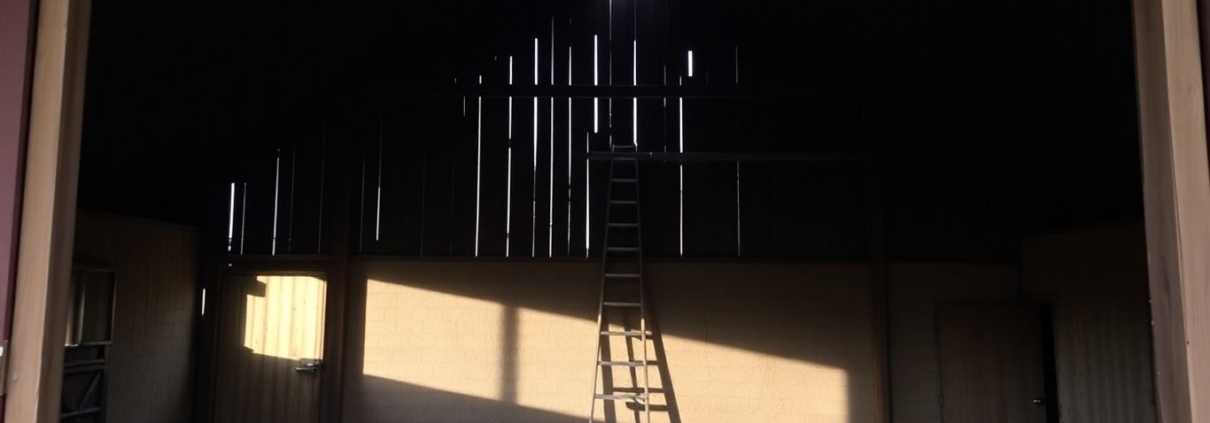
Damaged barn roof with debris on the floor.

Shropshire Firm Penalised £15,000 After Worker Suffers Serious Injuries in Barn Roof Fall

A Shropshire-based construction company has been fined £15,000 following a serious incident where a roofer fell from a barn roof, sustaining fractures to his skull and ribs. The incident occurred on September 2, 2023, during the installation of roof sheets onto a barn under construction in Oswestry. The Health and Safety Executive (HSE) investigated the matter, leading to the prosecution of the firm and its director.

Key Takeaways

  • Dewi Williams Limited fined £15,000 and ordered to pay £2,000 in costs.
  • Company director Dewi Williams received a 12-month conditional discharge and ordered to pay £1,000 in costs.
  • The incident highlights failures in planning and implementing safety measures for work at height.

The Incident

The roofer was working on a barn construction site in Oswestry when the accident happened. He was standing on a newly installed roof sheet, attempting to position the next one, when he lost his footing and fell to the ground. The fall resulted in severe injuries, including fractures to his ribs and skull.

HSE Investigation and Findings

An investigation conducted by the Health and Safety Executive (HSE) revealed significant shortcomings in the company’s safety practices. The HSE found that Dewi Williams Limited had failed to adequately plan the work at height and had not put in place appropriate measures to prevent falls or protect workers. Crucially, company director Dewi Williams was found to be directly involved in the work and permitted it to be carried out in an unsafe manner.

Legal Consequences

Dewi Williams Limited, located in Crickheathe, Oswestry, pleaded guilty to breaches of Regulations 4(1) and 6(3) of the Work at Height Regulations 2005. The company was fined £15,000 and ordered to pay £2,000 in costs.

Company director Dewi Williams also pleaded guilty to the same breaches, under Section 37 of the Health and Safety at Work etc. Act 1974. He received a 12-month conditional discharge and was ordered to pay £1,000 in costs.

HSE Warning on Work at Height

Sara Andrews, an HSE inspector, commented on the case, emphasising the critical importance of thorough risk assessments for all work at height activities. She stated that suitable control measures must be implemented to minimise the risk of falls and injuries. Ms. Andrews concluded that had the work been properly planned and appropriate equipment provided, the incident could have been avoided.

Sources

Cardiff cinema building with construction nearby.

Historic Cardiff Cinema Faces Demolition for Affordable Housing

A former cinema building on City Road in Cardiff, long standing in a state of disrepair, is set to be demolished to make way for a new development of affordable apartments and commercial units. The ‘Gaiety’ building, located at 195-197 City Road in Roath, has been vacant for an extended period.

Key Takeaways

  • The ‘Gaiety’ cinema building on City Road, Cardiff, will be demolished.
  • The site will be redeveloped into 70 affordable housing apartments and ground-floor commercial units.
  • The project is a collaboration between Draycott Group and Wales and West Housing Association.
  • The development aims to be “car-free” with ample cycle storage.

Redevelopment Plans

Draycott Group, in partnership with Wales and West Housing Association, has proposed to replace the existing structure with a modern building of up to seven storeys. This new development will provide 70 self-contained flats, all designated as 100 per cent affordable housing. The proposed accommodation includes 67 one-bedroom flats and three two-bedroom flats.

Community and Commercial Space

In addition to the residential units, the scheme includes plans for three commercial units on the ground floor, facing directly onto City Road. Residents will benefit from internal and external amenity spaces, as well as a private landscaped courtyard. The development is designed to be “car-free”, with secure cycle storage for 72 bicycles provided at the rear of the property.

Council Support

Cardiff Council’s planning committee is expected to review the application. A council report has indicated support for the principle of development, citing the site’s location within the City Road District Centre and its prolonged vacancy. The report deems the loss of the cinema building “acceptable” and suggests the mixed-use scheme aligns with local policy objectives. The committee is recommended to approve the application.

Sources