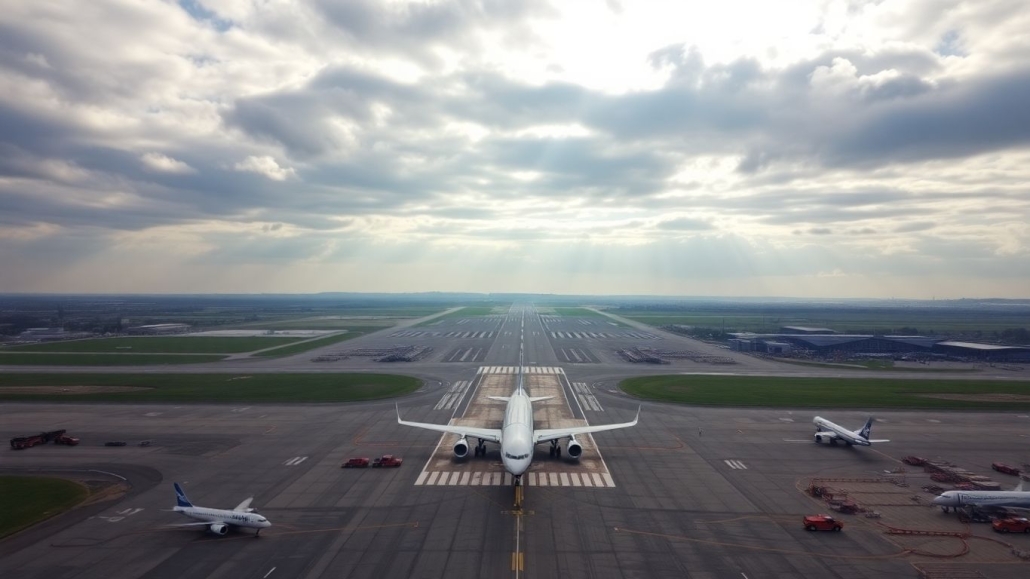
Heathrow’s £49bn Third Runway Plan Gets Government Green Light, Amidst Controversy
The UK government has officially approved Heathrow Airport’s ambitious £49bn plan to construct a third runway, a decision that promises to significantly expand the nation’s busiest hub. The project, slated for completion by 2035, aims to boost flight capacity by 57% and accommodate an additional 66 million passengers annually. However, the approval comes with considerable challenges, including a hefty price tag, environmental concerns, and the complex rerouting of the M25 motorway.
Key Takeaways
- The government has given its blessing to Heathrow’s £49bn expansion plan, including a third runway.
- The project aims for completion by 2035, potentially increasing flight movements by 57% and passenger numbers by 79%.
- A significant portion of the cost, £1.5bn, is allocated to diverting the M25 motorway.
- Airlines express concerns about increased passenger charges to fund the expansion.
- Environmental groups strongly oppose the plan, citing climate impact and disruption.
A Transformational Project with a High Price Tag
The approved plan involves the construction of a new 3,500m runway, estimated to cost £21bn. An additional £12bn is earmarked for new terminal infrastructure, with other expansion works bringing the total projected cost to £49bn. The government asserts that this expansion will enhance connectivity, support trade and tourism, and create over 100,000 jobs, thereby bolstering the UK economy. Transport Secretary Heidi Alexander stated that the project will “enable quicker, quieter, and greener flights.”
M25 Diversion and Alternative Proposals
A major engineering feat within the plan is the diversion of the M25 motorway, estimated to cost £1.5bn. This complex manoeuvre is necessary to accommodate the new runway. The government selected Heathrow Airport Ltd’s proposal over a rival £25bn plan from the Arora Group, which featured a shorter runway and did not require moving the M25. Despite the rejection of their specific proposal, the Arora Group has indicated a willingness to remain involved in the project.
Concerns and Opposition
The significant cost of the expansion has raised concerns among airlines, which fear that current passengers will bear the brunt through increased charges. Already one of the world’s most expensive airports, further hikes are a worry. Environmental groups have voiced strong opposition, labelling the project an “act of national self-harm.” They argue that any expansion is incompatible with the UK’s legally binding climate targets and will lead to the demolition of villages and displacement of residents. Paul McGuinness of the No 3rd Runway Coalition highlighted the potential demolition of villages and the displacement of up to 15,000 residents.
The Path Forward
The government is updating the Airports National Policy Statement to align with the new plans. A development consent order must be secured before construction can commence. Ministers are hopeful that work can begin within the current parliamentary term, potentially by the summer of 2030, with the runway operational by 2035. The Climate Change Committee will be consulted to ensure the expansion aligns with the UK’s net-zero framework.
Sources
- Heathrow airport’s £33bn plan for third runway gets government go-ahead, AOL.com.
- Heathrow airport’s £33bn plan for third runway chosen by government, The Independent.
- Heathrow airport’s £33bn third runway plan chosen by government | Heathrow airport, The Guardian.
- Government backs £33bn plan for third runway at Heathrow, BusinessGreen.
- Heathrow Airport’s £33bn third runway plan chosen by government | UK News, Sky News.