
Tag Archive for: Country

Office building of collapsed construction firm Harry Fairclough

Warrington HQ of Collapsed Construction Firm Harry Fairclough Set for Sale

The former headquarters of the historic construction firm Harry Fairclough, based in Warrington, is set to be sold off by administrators. The company, which had a significant presence in civil engineering and building projects for over 120 years, entered administration and subsequently liquidation, leading to the redundancy of around 150 employees.

Key Takeaways

  • The Warrington headquarters of collapsed construction firm Harry Fairclough is being sold.
  • The company entered administration in February last year, leading to around 150 job losses.
  • The 1.4-acre site is expected to be redeveloped for housing.
  • Administrators aim to maximise realisations for creditors.

Sale Of The Warrington Headquarters

Administrators Smith and Williamson have confirmed the sale of the freehold premises located off Howley Lane, which fronts the River Mersey. The 1.4-acre site, which has been marketed for the past 12 months, has attracted a mix of conditional and unconditional offers. The sale is intended to maximise the funds available to the creditors of Harry Fairclough Limited.

Company’s Demise And Impact

Harry Fairclough Limited, founded in 1898, specialised in civil contracts and also had a division for building projects for private and public sector clients. The firm entered administration in February of the previous year, with around 150 employees made redundant from its Warrington headquarters and West Yorkshire office. The company’s collapse was reportedly blamed on late and non-paying customers. At the time of its demise, the firm had undertaken projects such as a lion enclosure at Chester Zoo and work on extensions for Blackpool Sixth Form College.

Future Of The Site

The sale of the Howley Lane site is expected to pave the way for new housing development. Savills, which handled the sale, noted that the transaction underscores a growing confidence in the regional property market and strong demand for development land, even amidst broader market uncertainties. This positive outlook suggests potential for increased land values and mainstream house prices in the area.

Legal Action From Former Employees

Following the company’s collapse, a number of former employees have reportedly sought legal action. Law firm Simpson Millar stated it had begun investigations after receiving calls from ex-employees regarding the redundancy process. The firm was looking to secure a ‘Protective Award’ on behalf of employees, which is a payment awarded by an employment tribunal when an employer fails to properly consult staff during mass redundancies. Such awards can be accessed via the Government Insolvency Service.

Sources

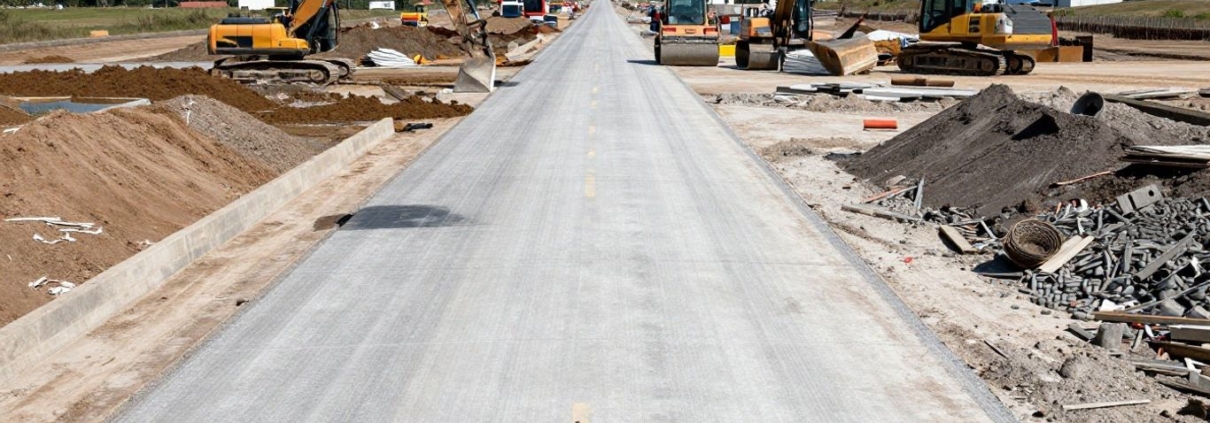
New concrete road construction with heavy machinery.

£1 Billion Deal Awarded for Major Concrete Road Overhaul Across England

A consortium has secured a significant £1 billion deal to reconstruct England’s aging concrete road network. The “Legacy Concrete Roads Reconstruction” framework, awarded by National Highways, will span from 2026 to 2032, marking a substantial shift from patch repairs to wholesale replacement of these vital routes.

Key Takeaways

  • A £1 billion framework has been awarded for the reconstruction of legacy concrete roads in England.
  • The initiative will run from 2026 to 2032, covering RIS3 and the start of RIS4.
  • The focus is on full reconstruction rather than repairs, doubling previous planned spend.
  • Modern, quieter, and more resilient road surfaces will be implemented.
  • Sustainability and circular economy practices, including recycling, are core components.

A New Era For Road Reconstruction

National Highways has identified approximately 400 miles of its Strategic Road Network, primarily built in the 1960s and 1970s, as “legacy” concrete carriageways. These sections, concentrated in the eastern parts of England, are among the most maintenance-intensive. The new framework represents a significant strategic pivot, moving away from the lifecycle extension and repairs that characterised the previous £400 million arrangement.

Scope Of Works

The comprehensive scope of the “Legacy Concrete Roads Reconstruction” framework includes the demolition of existing concrete pavements, full reconstruction, installation of new pavement furniture and markings, and upgrades to hardened central reserves. Contractors will also be responsible for temporary traffic management, acting as principal designer and contractor under CDM 2015 regulations, and providing carbon capture reporting. A key emphasis will be placed on the recovery, recycling, and reuse of materials, aligning with National Highways’ commitment to lower-carbon renewals and circular economy principles.

Industry Collaboration And Future Vision

Companies like Kier Infrastructure and Sisk Infrastructure have expressed enthusiasm for their roles in this vital project. James Birch, managing director for transportation at Kier Infrastructure, highlighted the “integrated design and build expertise” and the opportunity to “play a key role in delivering essential upgrades.” Alan Rodger, Managing Director Sisk Infrastructure, looks forward to continuing a “long-standing relationship with National Highways” and collaborating with framework partners and the local supply chain.

Nick Knorr, head of the National Concrete Roads Programme, stated that the replacement of aging concrete roads with modern designs will ensure “smoother, quieter, and more resilient routes for millions of people.” This next phase, delivered in partnership with the supply chain, aims to bring lasting improvements to communities and businesses across England.

Sources

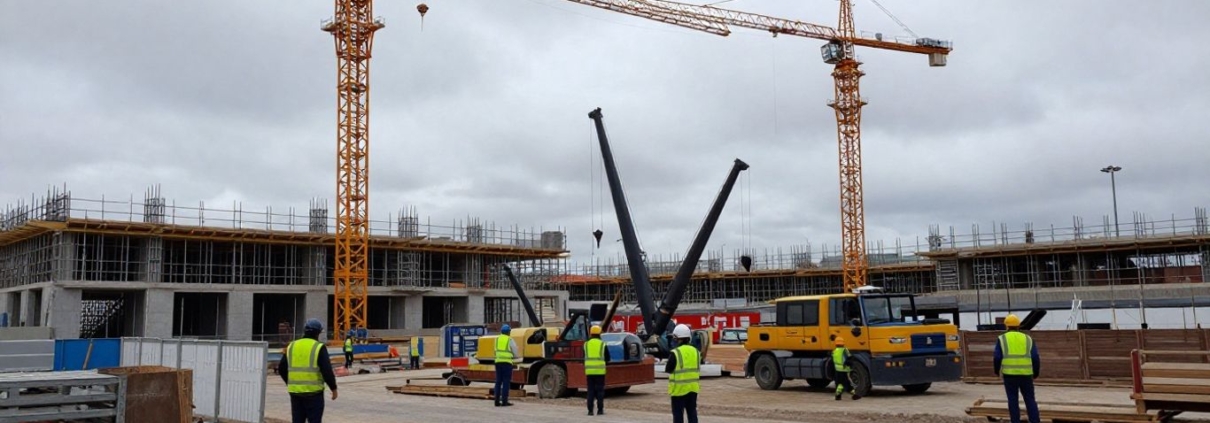
Bristol Airport terminal expansion construction site with cranes.

Bristol Airport Unveils Ambitious £30m Terminal Expansion Led by Farrans

Bristol Airport has officially broken ground on a major £30 million extension of its terminal, a move set to boost passenger capacity and modernise the travel experience. Awarded to contractor Farrans, the project marks the airport’s latest phase in a wider, transformative development plan.

Key Takeaways

  • £30m two-floor extension to boost annual passenger capacity to 12 million
  • 45% increase in floor space, with 17 new shops and restaurants, taking the total to 38 outlets
  • Enhanced arrivals area, improved immigration access, and expanded baggage reclaim
  • Project completed in a live airport environment, aiming to minimise disruption
  • Up to 150 jobs created during peak construction, with emphasis on local suppliers

Transforming the Passenger Experience

The extension comes as part of Bristol Airport’s long-term vision to become a premier regional hub. Once complete, passengers will find an almost 45% increase in terminal floor space, including an array of new premium food and retail brands. The number of retail and dining options will nearly double with 17 additional units, including a unique hidden speakeasy bar for travellers seeking something different.

Improved Facilities for Arrivals and Departures

Arrivals will see significant upgrades, such as a new domestic baggage reclaim area with an additional carousel, supporting a 20% uplift in capacity. The immigration area will also be improved with new lifts and stairs, enhancing accessibility and reducing congestion for incoming passengers.

Innovative Construction in a Live Environment

Farrans, who previously delivered the successful Public Transport Interchange in 2025, is deploying innovative construction techniques to maintain passenger flow with minimal disruption. Notably, a modular Bailey Bridge will enable vehicles and equipment to cross safely from landside to airside, while insulated hoardings and air-locked spaces ensure routes remain accessible.

Supporting the Local Economy

At the height of the build, the project will support up to 150 jobs, many sourced from local suppliers. The airport’s commitment extends beyond construction, with ongoing investment in sustainable transport infrastructure, including improved bus, coach, and pedestrian access.

A Broader Vision For Growth

This extension is a significant step in Bristol Airport’s ambitious £400 million upgrade programme, with a broader master plan aiming to raise capacity to 15 million passengers and enhance access to the South West and South Wales regions. Recent transport improvements and future plans, such as a proposed mass transit link to Bristol city centre, underpin the airport’s vision of remaining at the forefront of regional connectivity and service.

The £30 million terminal upgrade signals a bold new era for Bristol Airport, promising travellers more choice, greater comfort, and a smoother journey for years to come.

Sources

Modern green industrial park construction site in Cheadle.

UK’s Greenest Light-Industrial Park Underway in Cheadle

Work has commenced on the Cheadle Eco Park, a ground breaking £25 million development poised to become one of the UK’s most sustainable light-industrial parks. Located in Cheadle Heath, Stockport, the project aims to set new benchmarks in environmental performance for industrial buildings.

Key Takeaways

  • The Cheadle Eco Park is designed to achieve BREEAM Outstanding certification, placing it in the top 1% of UK non-residential buildings for sustainability.
  • It will be the UK’s largest purpose-built industrial and logistics development to feature a structure made entirely from sustainably sourced timber.
  • The project is supported by a £4.4 million grant from the government’s Town Fund and is slated for completion in March 2027.

A New Standard in Sustainable Industrial Development

Caddick Construction has officially begun work on the Cheadle Eco Park, a significant industrial development for Stockport Council. The seven-acre site will feature six light industrial units, ranging from 8,374 sq ft to 43,800 sq ft, collectively spanning 115,000 sq ft. These new units will replace older industrial buildings on the site.

The park’s design, by AEW Architects, prioritises exceptional environmental standards. It is engineered to achieve Building Research Establishment Environmental Assessment Method (BREEAM) Outstanding certification, a testament to its commitment to sustainability. This places Cheadle Eco Park among the top 1% of non-residential buildings in the UK for environmental performance.

Innovative Green Technologies

Sustainability is at the core of the Cheadle Eco Park’s design. The development will incorporate advanced technologies such as air source heat pumps, natural ventilation systems, and smart, energy-efficient lighting. These features are intended to help the park achieve an Energy Performance Certificate (EPC) rating of A, signifying maximum energy efficiency.

A key distinguishing feature of the Cheadle Eco Park is its construction material. It is set to be the UK’s largest purpose-built industrial and logistics development utilising a structure constructed entirely from sustainably sourced timber. This choice over traditional steel frames significantly reduces embodied carbon, a critical factor in mitigating the environmental impact of construction.

Investment and Future Outlook

The scheme, which benefits from a £4.4 million grant from the government’s Town Fund, is scheduled for completion in March 2027. Network Space Developments is managing the project on behalf of Stockport Council, the landowner.

David Saville, northwest managing director at Caddick Construction, highlighted the project’s importance, stating, “Breaking ground at Cheadle Eco Park marks a hugely important moment not just for Stockport, but for the future of sustainable industrial development across the region.” He added that the company is proud to be delivering “one of the UK’s greenest industrial parks, built to exceptional environmental standards and designed to support the next generation of low-carbon businesses.”

Brian Bradley, chair of the Cheadle Towns Fund Board, echoed this sentiment, calling the start of work “a major step forward in delivering one of the UK’s most advanced and environmentally ambitious light industrial developments.” He emphasised the scheme’s role in investing in Cheadle’s economic future, promising high-quality jobs, support for clean growth industries, and the creation of a modern, sustainable employment destination.

Sources

Highland Council Appoints Four Contractors for £2.1bn Infrastructure Overhaul

Highland Council has selected four main contractors to spearhead the initial phase of its ambitious £2.1 billion Highland Investment Plan (HIP). This 20-year capital programme aims to modernise public infrastructure across the region, with the first tranche of projects focusing on creating community hubs.

Key Takeaways

  • Four contractors – Morgan Sindall, Morrison Construction, Robertson Group, and Ogilvie Construction – have been appointed.
  • The projects are part of the first phase of the £2.1bn Highland Investment Plan (HIP).
  • The initial projects include schools, offices, depots, and partner facilities combined into community hubs.
  • Highland Council is the client, with hub North Scotland acting as the delivery partner.

Major Infrastructure Investment Underway

The appointed contractors will deliver seven key projects spanning from Thurso to Inverness. These schemes are the first to reach the preferred contractor stage under the council’s Points of Delivery (PoDs) programme. This initiative consolidates various public facilities into integrated community hubs, enhancing local services and infrastructure.

Project Allocations

The initial projects and their awarded contractors are:

  • Morgan Sindall: Beauly Primary PoD and Charleston Academy PoD.
  • Robertson Group: Dingwall Primary PoD (including St Clements School) and Tornagrain Primary PoD.
  • Morrison Construction: Fortrose Academy PoD and Thurso PoD.
  • Ogilvie Construction: Inverness High School PoD.

Funding and Delivery

The HIP will be financed through a combination of capital investment and a dedicated annual allocation equivalent to 2% of ring-fenced council tax revenue. The council has committed £750 million for investment over the next five years as part of the broader £2.1 billion programme. The procurement route, while not explicitly detailed, suggests an early contractor engagement process, likely a two-stage approach under the hub North Scotland framework. This allows for early involvement in consultation, design development, and pre-planning activities.

Stakeholder Reactions

Council leader Raymond Bremner hailed the appointments as a “major milestone” that will drive long-term improvements to schools and community facilities. Council convener Bill Lobban indicated that the next steps involve further community engagement and detailed design. Glynis Sinclair, chair of the housing and property committee, highlighted the programme’s potential to support new homes and employment opportunities, including graduate and apprenticeship roles. Richard Park, chief executive of hub North Scotland, confirmed that design and delivery efforts are already in progress.

Contractors expressed enthusiasm for the collaboration. Gordon Williamson, managing director for Morrison Construction Building Highland, stated their commitment to developing plans for two new schools. Stuart Parker, managing director of Morgan Sindall Construction in Scotland, noted the appointments reflect the strength of their Inverness-based team. Elliot Robertson, CEO of Robertson Construction Group, confirmed their team’s collaboration on the Dingwall and Tornagrain projects, while Martin Poole, preconstruction director at Ogilvie Construction, outlined their role in delivering the Inverness High School building.

Sources

HS2 tunnel boring machine at Euston, London.

HS2 Tunnelling to Euston Commences: A New Era for High-Speed Rail in London

The first of two colossal tunnel boring machines (TBMs) has officially begun its journey from Old Oak Common to Euston Station, marking a significant milestone for the High Speed Two (HS2) project. This crucial step brings the high-speed railway closer to its central London terminus, promising substantial economic benefits and improved connectivity.

Key Takeaways

  • Tunnelling for HS2 into Euston has officially begun, with the first of two TBMs starting its 4.5-mile journey.
  • This development is seen as essential for unlocking HS2’s full economic potential, with estimates suggesting up to £41 billion could be added to the UK economy by 2053.
  • The project is expected to support approximately 34,000 jobs through redevelopment around Euston.
  • The start of tunnelling signifies renewed momentum for HS2, addressing previous concerns about the line potentially terminating at Old Oak Common.

A Monumental Engineering Feat

The TBM, named ‘Madeleine’ after Madeleine Nobbs, former president of the Women’s Engineering Society, weighs a staggering 1,624 tonnes. As it advances, it simultaneously excavates the tunnel and constructs its lining using pre-cast concrete segments. This process will remove over 1.5 million tonnes of excavated material, much of which will be transported by rail to minimise environmental impact and disruption.

This operation is one of the most complex engineering challenges on the HS2 project, with the two parallel tunnels requiring the installation of over 8,000 pre-cast tunnel rings. The entire tunnelling phase is anticipated to take between 12 to 18 months.

Unlocking Economic Potential

Bringing HS2 into Euston is considered vital for realising the project’s full economic benefits. Estimates suggest that redevelopment around Euston could inject approximately £41 billion into the UK economy by 2053, creating around 34,000 jobs. Furthermore, HS2 is projected to contribute £10 billion to the west London economy over the next decade, fostering the development of new homes and employment opportunities.

Rail Minister, Lord Hendy, expressed his enthusiasm, stating, “It was brilliant to switch on the tunnel boring machine at Old Oak Common today – not just because it’s an engineering marvel – but because it brings HS2’s journey to Euston another step closer to reality.”

A Modern Transport Hub for London

The plans for Euston extend beyond the new HS2 station, envisioning a fully integrated transport hub. This will combine the new HS2 facilities with a redeveloped mainline station and upgraded London Underground services. A new body, the Euston Delivery Company, will oversee both the transport improvements and wider commercial development at the site.

Broader Railway Modernisation

The commencement of tunnelling to Euston underscores the government’s commitment to modernising Britain’s railways. This initiative aligns with wider reforms aimed at consolidating rail services under Great British Railways, with the objective of enhancing value, reliability, and passenger experience across the network.

With over 33,000 people currently employed on HS2, the project continues to be a significant driver of employment and economic activity. The successful completion of the Euston tunnels is seen as a crucial step in delivering faster, more reliable journeys and freeing up capacity on existing rail lines.

Sources

Minister looking at distant train tracks, Northern Powerhouse Rail project.

Northern Powerhouse Rail: Minister Dodges Deadline for £45bn Project

Rail minister Lord Peter Hendy has declined to provide a specific completion deadline for the £45bn Northern Powerhouse Rail (NPR) project, stating that significant railway improvements “take a very long time.” While acknowledging that benefits will begin to be felt in the 2030s, Lord Hendy could not offer a precise timeline for all components of the scheme, emphasizing the need for careful planning and safe delivery.

Key Takeaways

  • No firm completion date set for the £45bn Northern Powerhouse Rail project.
  • Benefits expected to emerge in the 2030s, with full completion potentially by 2045.
  • Industry bodies call for a clear delivery timetable to enable investment and planning.
  • Government commits to £1.1bn spending by 2029, with a £45bn cap thereafter, in 2026 prices.

Project Timeline Uncertainty

During a House of Lords debate, Baroness McIntosh of Pickering pressed Lord Hendy for a completion date for the ambitious project aimed at improving rail links across the North of England. The minister responded by stating, “I can’t tell her precisely when all the parts of the improvements will be delivered because… we do need to plan this out properly.” He cautioned that railway improvements are lengthy processes, stressing the importance of safe execution, a stark contrast to historical construction methods.

Reports following the initial announcement of the revived NPR plans suggested a completion date of at least 2045. This lack of a definitive timeline has drawn concern from industry stakeholders.

Industry Calls for Clarity

The Civil Engineering Contractors Association (CECA) has urged the government to provide a “clear delivery timetable” for NPR. Ben Goodwin, CECA’s director of policy and public affairs, highlighted that such clarity is “essential for industry to invest and deliver.” He added that maintaining momentum and allowing the industry to plan for “spades in the ground” are crucial for transforming the project from an aspiration into tangible improvements for people’s lives.

Funding and Scope

The NPR proposals outline a £45bn investment to connect cities from Liverpool to Newcastle through a three-stage plan, including a new line between Liverpool and Manchester. The government plans to allocate £1.1bn to the project by 2029, with a spending cap of £45bn for subsequent phases. Lord Hendy confirmed that this £45bn figure is in “2026 pounds,” aiming to avoid the inflationary accounting issues seen with HS2.

Lord Hendy also pushed back against assumptions that NPR would face the same budget overruns as HS2, citing the progress on the Transpennine route upgrade as evidence that substantial enhancements can be achieved with proper planning and within budget constraints.

Future Infrastructure Plans

In addition to NPR, the government intends to construct a new line between Birmingham and Manchester, distinct from the cancelled northern leg of HS2. Lord Hendy confirmed that land is being retained between the West Midlands and Crewe, anticipating that a railway will eventually be needed to address capacity issues. However, he indicated this would likely not be a high-speed line, nor built to the costly specifications of HS2 Phase 1.

Sources

Bricklayer in court over asbestos case.

High Court Ruling: Self-Employed Bricklayer Deemed Employee in Landmark Asbestos Case

In a significant ruling, the High Court has determined that a self-employed bricklayer, exposed to asbestos, should have been classified as an employee. This decision has far-reaching implications for how employment status is viewed, particularly in cases involving occupational health risks and potential compensation claims.

The case centred on a bricklayer who had worked for a company for many years, undertaking numerous jobs. Despite being issued with invoices and operating under a contract that labelled him as self-employed, the court found that the reality of his working relationship pointed towards an employment status.

Key Takeaways

  • The High Court has reclassified a self-employed bricklayer as an employee for the purposes of an asbestos-related claim.
  • The ruling emphasises that the true nature of the working relationship, rather than contractual labels, will determine employment status.
  • This decision could impact future claims for workers exposed to hazardous materials and potentially lead to a review of employment practices.

The Ruling’s Rationale

The court’s decision was based on a detailed examination of the control exercised by the company over the bricklayer’s work. Factors considered included the level of supervision, the integration of the worker into the company’s operations, and the degree of autonomy the individual possessed. The court found that the company exerted a significant degree of control, consistent with an employer-employee relationship, despite the contractual designation.

This judgment highlights the importance of looking beyond the surface-level contractual arrangements to understand the genuine nature of the working relationship. It suggests that companies cannot simply label individuals as self-employed to avoid employment obligations and responsibilities, especially when it comes to health and safety.

Implications for Asbestos Claims and Beyond

The ruling is particularly pertinent for individuals who have suffered or may suffer from asbestos-related diseases due to historical workplace exposure. By being recognised as an employee, the bricklayer may have a stronger basis for claiming compensation from the company or its insurers. This could open the door for other individuals in similar situations, who were classified as self-employed but worked under conditions indicative of employment, to pursue their own claims.

Furthermore, the decision serves as a stark warning to businesses that rely on a contingent workforce. It underscores the need for a thorough review of their employment practices and contractual agreements to ensure compliance with employment law and to mitigate potential liabilities, especially concerning health and safety at work.

UK Construction Output Falters in October 2025, Showing Fragile Recovery

UK construction output experienced a decline in October 2025, falling by 0.6% compared to the previous month. This downturn follows a modest increase in September, highlighting the ongoing fragility of the sector’s recovery. Both new construction projects and repair and maintenance work contributed to the monthly decrease.

Key Takeaways

  • Monthly construction output fell by 0.6% in October 2025.
  • The three-month period to October saw a 0.3% decrease in total output.
  • Private housing repair and maintenance was the main contributor to the decline.
  • Concerns remain over planning system delays and developer confidence.

Monthly Output Decline

The Office for National Statistics (ONS) reported that monthly construction output contracted by 0.6% in October 2025. This followed a 0.2% rise in September. The decrease was driven by a 0.7% fall in new work and a 0.6% drop in repair and maintenance activities.

Three-Month Trends

Over the three months leading up to October 2025, total construction output saw a decrease of 0.3%. Within this period, repair and maintenance work fell by 1.0%, while new work experienced a slight growth of 0.1%. Four out of the nine sectors surveyed reported a decline.

Sectoral Performance

The private housing repair and maintenance sector was identified as the primary negative contributor to the overall decrease, experiencing a significant drop of 2.3%. Private new housing also saw a decline of 1% during the three-month period.

Industry Expert Opinions

Industry professionals expressed concerns about the sector’s stability. Jo Streeten, managing director for buildings & places at Aecom, noted that the dip underscores the fragility of the recovery and that clients are awaiting clearer signs of faster progress before committing to major projects. She suggested that practical measures like increasing the number of planners, alongside the adoption of AI and digital tools to expedite review processes, could boost confidence and create a more robust pipeline for 2026.

Neil Leitch, managing director of development finance at Hampshire Trust Bank, echoed these sentiments, stating that housebuilding has struggled for momentum. He highlighted that developers face tightening viability conditions and a lack of clarity and support from the surrounding system. Leitch pointed to planning system pressures, with a significant number of planners considering leaving the profession, which could further lengthen decision times and widen the gap between granted permissions and actual site starts. He emphasized the need for consistency, capacity, and follow-through from policymakers, alongside collaboration between policymakers, developers, and lenders, to ensure construction underpins economic growth.

Sources

Empty construction site under grey skies, showing decline.

UK Construction Sector Plummets to Five-and-a-Half Year Low Amidst Economic Uncertainty

The UK construction sector has experienced its most significant downturn in over five years, with output falling sharply in November. This contraction, the eleventh consecutive month of decline, is attributed to weak client confidence, delayed investment decisions linked to upcoming fiscal events, and a general scarcity of new projects. All sub-sectors, including housing, commercial construction, and civil engineering, reported the fastest drops in activity since May 2020.

Key Takeaways

  • The S&P Global UK Construction Purchasing Managers’ Index (PMI) dropped to 39.4 in November, its lowest point since May 2020.
  • New orders saw the steepest decline since early 2009, excluding the pandemic period.
  • Business optimism has reached its lowest level since December 2022.

Steepest Downturn in Over Five Years

November data revealed a significant contraction in the UK construction sector, with the headline S&P Global UK Construction PMI falling to 39.4 from 44.1 in October. This marks the lowest reading since May 2020 and signifies an accelerated reduction in output levels. The decline has persisted for eleven consecutive months, indicating a prolonged challenging period for the industry.

Sub-Sector Slump

All three key sub-sectors within construction experienced severe declines. Housing activity saw its fastest downturn in five-and-a-half years with an index of 35.4. Commercial construction also faced significant headwinds, registering 43.8, while civil engineering experienced the sharpest fall at 30.0. These figures reflect widespread reports of fragile market confidence and a general lack of incoming new work.

New Orders and Employment Decline

New business within the sector decreased at a rapid pace in November. Approximately 44% of surveyed companies reported a fall in new orders, with only 17% signalling an increase. This represents the fastest downturn in new work since early 2009, barring the pandemic period. Consequently, employment numbers also fell for the eleventh consecutive month, with the latest reduction being the steepest since August 2020, reflecting the lack of new projects and elevated wage pressures.

Weakening Business Optimism

Looking ahead, the outlook for the construction sector remains subdued. Business optimism has fallen to its lowest level since December 2022. While 31% of companies anticipate an upturn in activity over the next 12 months, this is only marginally higher than the 25% forecasting a decline. Concerns about the UK’s economic prospects and cutbacks in clients’ investment spending plans are dampening future activity expectations.

Sources