
Tag Archive for: featured

Student housing tower in Stratford

Stratford Student Housing Tower Gets Green Light After Height Reduction

A proposed student housing tower in east London has received approval after developer Dominus revised its plans, notably reducing the building’s height. The project, located on Stratford High Street, will provide 692 student beds, with a significant portion designated as affordable housing. This decision follows a previous refusal of a taller iteration of the scheme.

Key Takeaways

  • A 31-storey student housing tower in Stratford has been approved.
  • The revised plans include 692 student beds, with 35% at affordable rents.
  • The development aims to address a shortage of student accommodation in the Newham area.
  • The project includes public realm improvements and a new community pub.

Revised Plans Secure Approval

Dominus has successfully gained approval for its student housing development at 302-312 Stratford High Street. The initial proposal for a 34-storey building was refused by the London Legacy Development Corporation and subsequently dismissed at appeal due to concerns over its height, massing, and design impact on the streetscape. In response, Dominus reworked the plans, collaborating with Newham Council and its Quality Review Panel. The newly approved scheme, designed by Metropolitan Workshop, stands at 31 storeys and will offer 692 student beds.

Addressing Student Accommodation Needs

The development is strategically located within a five-minute walk of Stratford Station and close to several universities, including University College London East, London College of Fashion, and the University of East London. These institutions collectively house over 27,000 students. Research indicates a substantial demand for student housing in the Newham borough, with over 10,500 students reportedly unable to secure a bed space, highlighting the need for such developments.

Community Benefits and Design Enhancements

Beyond student accommodation, the project incorporates significant community benefits. The design includes landscaped roof terraces, communal living spaces, and amenities such as a gym and yoga studio. Furthermore, the public realm has been enhanced by landscape architects Spacehub, featuring new outdoor spaces and greening along Stratford High Street. A key element of the revised plan is the inclusion of a new, improved pub intended to serve as a community hub. This focus on enhancing the street-level environment and providing community facilities was a crucial aspect of the reworked proposal.

Developer’s Commitment

Dominus has emphasized its commitment to delivering much-needed student homes and improving the local area. Edward Law, Planning Associate at Dominus, stated that the reworked plans aim to transform a vacant brownfield site into a vibrant space with student accommodation, a new pub, and enhanced street-level features. The developer is actively involved in other student accommodation projects across London, including schemes in Holborn Viaduct, Crutched Friars, and Fleet Street, and recently completed the Scape Hammersmith development, which features a high proportion of affordable student accommodation.

Sources

New 24-storey student tower in Leeds

Leeds Welcomes New 24-Storey Student Tower: Threadworks Opens Its Doors

Winvic Construction has successfully completed Threadworks, a striking 24-storey student accommodation scheme in the heart of Leeds. Located on the corner of Lisbon Street and Castle Street, this new development offers 548 beds and is set to house students for the 2025/2026 academic year, providing a modern and well-connected living space.

Key Takeaways

  • A new 24-storey student accommodation tower, Threadworks, has been completed in Leeds.
  • The development offers 548 en-suite bedrooms and a range of communal amenities.
  • Winvic Construction prioritised sustainability and social value during the project.

A Landmark Development

Threadworks, developed for client CASL Lisbon Street, stands as a significant addition to Leeds’s urban landscape. Situated on the former International Swimming Pool site, the 548-bed tower is designed to offer students a vibrant and convenient place to live, with close proximity to the city’s two main university campuses and Leeds train station. The development was managed by DLC Europe and Colliers, with KS4 acting as the Employer’s Agent.

Student Living and Amenities

The 24-storey building features single occupancy and en-suite bedrooms, catering to the needs of modern students. Beyond private living spaces, Threadworks boasts a variety of shared amenities designed to foster a sense of community and provide convenient facilities. These include dedicated cinema rooms, a fitness centre, relaxation areas, a games room, and a TV lounge. Additionally, residents can enjoy a spacious 1,593 sq ft roof terrace on the first floor, offering an elevated outdoor space.

Commitment to Sustainability and Social Value

Winvic Construction implemented an innovative approach during the build to reduce its environmental impact. By replacing gas-fired boilers with electric alternatives for hot works, the project not only cut carbon emissions but also enhanced safety by eliminating open flames. The building itself is constructed to BREEAM Excellent standards, underscoring a commitment to sustainability.

Beyond environmental considerations, Winvic focused on creating a positive social legacy. An Employment and Skills Plan was put in place, generating 134 new jobs during construction, with a strong emphasis on local recruitment. The initiative supported nine individuals new to the industry, five veterans into engineering and electrical roles, and a further six into training and employment. Three local apprentices were recruited, and 30 existing apprenticeships were sustained. Outreach programmes included career workshops in local schools and colleges, and donations to a local primary school. Furthermore, Winvic partnered with local charities, raising funds for Zarach (providing beds for children) and donating to Leeds Community Wood Recycling, while also supporting St George’s Crypt, a homelessness charity, with hygiene products and an on-site clothes bank.

Mark Jones, Managing Director of Multi-Room at Winvic Construction, expressed pride in delivering this “landmark PBSA development in the heart of Leeds,” highlighting its strategic location for students.

Sources

Taylor Wimpey homes with overcast sky.

Taylor Wimpey Sales Dip Amidst Budget Uncertainty and Economic Headwinds

Housebuilder Taylor Wimpey has reported a decline in its sales rate for the latter half of the year, attributing the slowdown to uncertainty surrounding the upcoming Autumn Budget and ongoing affordability pressures. Despite these challenges, the company maintains its full-year profit and completion forecasts.

Key Takeaways

  • Taylor Wimpey’s net private sales rate per outlet per week fell to 0.63 in the period from June 30 to November 9, down from 0.71 in the same period last year.
  • The company expects its full-year operating profit to be around £424 million, with completions forecast between 10,400 and 10,800 homes.
  • Broader market sentiment shows a cooling housing market, with surveyors reporting a decline in new listings and buyer demand.

Impact of Budget Speculation

Taylor Wimpey’s chief executive, Jennie Daly, stated that market conditions remain challenging, significantly impacted by the uncertainty surrounding the forthcoming UK Budget. This has led to a "wait and see" approach from potential buyers, particularly affecting sales in the second half of the year. The company’s order book has also seen a reduction, with 7,253 homes valued at £2.12 billion as of November 9, down from the previous year.

Broader Market Concerns

The concerns extend beyond Taylor Wimpey, with broader indicators suggesting a slowdown in the UK housing market. The Royal Institution of Chartered Surveyors reported a deterioration in its index of homes for sale, reaching its lowest point since 2021. Buyer demand and sales volumes have weakened, exerting downward pressure on house prices. Speculation about potential tax changes, including a possible mansion tax or changes to council tax, is reportedly dampening activity, especially in higher-value markets. Zoopla noted a fall in demand for homes priced over £500,000, with some buyers delaying decisions ahead of the budget announcement.

Company Outlook

Despite the softer market conditions, Taylor Wimpey has reiterated its financial guidance. The company anticipates its full-year operating profit, including joint ventures, to be approximately £424 million, consistent with previous forecasts. The projected number of home completions for the full year also remains unchanged, estimated to be between 10,400 and 10,800 homes. The housebuilder remains focused on managing its operations efficiently and leveraging its landbank to achieve profitable growth and maximise shareholder returns in the medium term.

Sources

A9 road through a Scottish valley.

A9 Dualling: Three Giants Vie for £205m Pitlochry to Killiecrankie Contract

Transport Scotland has announced that three major contractors have been shortlisted for a significant £205 million contract to dual a crucial 6.4km section of the A9 between Pitlochry and Killiecrankie. This marks another step forward in the ambitious Scottish Government initiative to transform the A9 into a dual carriageway.

Key Takeaways

  • Three contractors – Balfour Beatty, Kier Transportation, and Wills Bros Civil Engineering – are in contention for the £205m project.
  • The scheme involves upgrading 6.4km of the A9 and constructing or upgrading nine bridges.
  • The contract is expected to be awarded in autumn 2026, with completion anticipated by the end of 2030.
  • This section will be the third to utilise Transport Scotland’s modified NEC4 contract, incorporating a carbon reduction fund.

The Pitlochry to Killiecrankie Project

The selected contractors will participate in a competitive dialogue process, after which they will submit final tenders for the project. This section of the A9 dualling programme will see approximately 6.4 kilometres of single carriageway upgraded to dual carriageway standard. A key feature of the project will be the construction or upgrade of nine bridges. These include a new crossing over the River Tummel, adjacent to the existing Tummel Bridge, a second bridge over Loch Faskally near the existing Clunie Bridge, and a new rail bridge spanning the Highland Mainline Railway.

Advancing the A9 Dualling Programme

This contract is a vital part of the wider A9 Dualling Programme, a Scottish Government commitment to convert 129km of the A9 between Perth and Inverness into a dual carriageway by 2035. Once the Pitlochry to Killiecrankie section is complete, nearly half of the A9 between Perth and Inverness will be dualled. The project also aims to enhance active travel links and non-motorised user crossings, including routes along the Rob Roy Way.

Contractual Framework and Sustainability

The project will be delivered under Transport Scotland’s modified NEC4 Engineering and Construction contract. This version includes a capped carbon reduction fund, designed to financially support and incentivise the successful contractor to implement lower-emission construction measures. This approach underscores a commitment to sustainable infrastructure development.

Timeline and Social Value

Following the competitive dialogue and final tender evaluation, the contract award is anticipated in autumn 2026. Construction is expected to be completed by the end of 2030. The procurement process also includes social value requirements, focusing on commitments to skills and training, wellbeing, local subcontracting, and educational outreach through the Academy9 programme.

Transport Scotland has confirmed that the government remains dedicated to the completion of the A9 dualling works. The ongoing procurement stage is crucial for refining designs to ensure value for money for the Scottish taxpayer.

Sources

Liverpool Street Station concourse with trains and passengers.

Liverpool Street Station Redevelopment Decision Postponed as Network Rail Re-evaluates Project

Network Rail has announced a delay in the decision-making process for the proposed redevelopment of Liverpool Street Station. The £1 billion project, which has faced significant public and heritage body opposition, is now undergoing a thorough re-evaluation. Originally expected to reach a planning committee by the end of this year, the decision has been pushed back to spring, with the project team working to address concerns and present a revised, more heritage-sensitive plan.

Key Takeaways

  • The planning decision for Network Rail’s £1 billion Liverpool Street Station redevelopment has been delayed until spring.
  • The project, initially designed by Herzog & de Meuron and later by Acme, has faced substantial public and heritage objections.
  • Network Rail is re-evaluating the scheme, aiming for a design that is more sympathetic to the station’s listed status.
  • The revised plans focus on improving passenger capacity and experience while respecting the historical architecture.

Project History and Public Opposition

The redevelopment of Liverpool Street Station has been a contentious issue since its initial proposals were revealed. The original £1.5 billion plan, designed by Herzog & de Meuron and developed with Sellar, faced widespread criticism for its perceived negative impact on the grade II-listed station and the adjacent grade II*-listed Great Eastern Hotel. This led to over 2,200 objections from the public and strong opposition from heritage groups like Historic England.

Shift to a New Design Approach

In response to the significant backlash, Network Rail scrapped the initial plans and appointed Acme as the lead architect for a revised scheme. This new approach, valued at around £1 billion, aims to be more heritage-led. Key changes include scaling back the controversial office tower that was planned to cantilever over the hotel and focusing on retaining more of the existing station structure. The new design seeks to improve passenger flow, increase capacity, and enhance the station’s overall user experience, with a particular emphasis on respecting the historical context of the site.

Addressing Heritage and Capacity Concerns

The revised proposals are designed to be more sympathetic to the station’s Victorian architecture and the adjoining Great Eastern Hotel. Acme’s design avoids altering the listed hotel and focuses on redeveloping the 1980s and 1990s extensions. Network Rail has engaged in extensive consultations with heritage bodies and the public to ensure the new plans are well-received. Beyond aesthetic considerations, the redevelopment aims to address the station’s increasing passenger numbers, which have surged following the opening of the Elizabeth Line, making it the UK’s busiest station.

Sources

Hotel construction on Swansea waterfront

Swansea’s Ambitious Waterfront Hotel Project Faces Delays Amidst Commercial Discussions

Plans for a significant 150-bedroom hotel, complete with a rooftop bar offering panoramic views of Swansea Bay, are currently in a holding pattern. Initially slated to commence construction this year, the project, intended to be situated between Swansea Arena and the LC leisure centre, has seen no recent updates. Swansea Council has confirmed ongoing "commercial discussions" as the reason for the current silence, with further details to be released once negotiations are finalised.

Key Takeaways

  • A 150-bedroom hotel with a rooftop bar is planned for Swansea city centre.
  • Construction, initially expected this year, is delayed due to ongoing commercial discussions.
  • The council has selected a preferred developer and operator but has not yet revealed their identity or the hotel brand.
  • The project is part of wider regeneration efforts in Swansea, including the Copr Bay district.
  • The hotel is anticipated to attract around 40,000 visitors annually and provide a significant economic boost.

Project Details and Economic Impact

The proposed hotel development aims to be a key addition to Swansea’s burgeoning tourism and hospitality sector. It is projected to welcome approximately 40,000 visitors each year, offering a substantial boost to the local economy. The development is funded through a combination of developer investment and grants, including contributions from the Welsh Government. The sale of the earmarked land has been approved by the council.

Wider Regeneration Context

This hotel initiative is intrinsically linked to Swansea’s broader regeneration strategy, particularly following the successful launch of the £135 million Copr Bay district, which notably includes the Swansea Arena. Local representatives have acknowledged a rising demand for accommodation, driven by the city’s expanding tourism industry. Consequently, the council is actively exploring additional sites for future hotel developments to meet this growing need.

Next Steps and Future Outlook

While the project’s timeline has been extended, the council remains committed to its progression. Securing final agreements and obtaining necessary planning permission are crucial prerequisites before construction can commence. Despite the current lack of public updates, there is optimism that the hotel will eventually become a reality, enhancing Swansea’s evolving waterfront landscape and contributing to its appeal as a visitor destination.

Sources

London Stock Exchange building with three architectural models.

Three Giants Vie for £200 Million London Stock Exchange Renovation Contract

Three major construction firms have submitted bids for a significant £200 million contract to refurbish and extend the London Stock Exchange’s headquarters in Paternoster Square. The ambitious project aims to modernise the iconic building to meet current and future office standards as its initial 25-year lease nears its end.

Key Takeaways

  • Bovis, Wates, and Structure Tone are the final contenders for the lucrative contract.
  • The renovation includes a new glazed lobby, roof extensions, and enhanced outdoor spaces.
  • The project is being managed by Oxford Properties, with the winner expected early next year.

The Contenders

Bovis, Wates, and Structure Tone have all returned their bids for the extensive refurbishment and extension work. Bovis has a historical connection to the site, having built the existing King Edward Court building, designed by Eric Parry, back in 2003.

Wates’ bid is reportedly being spearheaded by its Fit Out business, while Structure Tone’s UK operations are jointly managed by individuals with prior experience at ISG’s fit-out division.

Project Scope And Vision

The proposed revamp, designed by the London practice Carter Gregson Gray, includes a striking double-height glazed lobby. This feature is intended to showcase the market’s daily opening and closing ceremonies to the public on Paternoster Square.

Further enhancements will involve several roof-level extensions, including a new double-height events pavilion and a single-storey roof terrace pavilion. Additionally, a single-storey extension is planned for a corner of the building. The project also promises substantial outdoor space, with a new roof terrace offering prime views of St Paul’s Cathedral’s dome, alongside balconies on multiple levels facing Paternoster Square.

Project Management And Timeline

Oxford Properties, acting as the main applicant, is overseeing the wider refurbishment, with developer Hines also involved as long-term leaseholders. The intention behind the scheme, developed over the past year, is to update the building to contemporary office standards.

The London Stock Exchange Group (LSEG) is expected to temporarily relocate to the neighbouring St Martin’s Court for two years during the refurbishment. LSEG has appointed its own project team for the fit-out of King Edward Court, comprising MCM as lead architect, RLB for cost management, Cushman & Wakefield as project manager, and Alan Baxter for structural engineering.

Oxford Properties’ team for the main refurbishment includes G&T for costs, WSP for structures, Newmark for planning, M3 Consulting as project manager, Turley for townscape and carbon assessments, Velocity for transport, Arup for facade consultancy, and Studio GB for landscape design.

A decision on the winning bid is anticipated in early next year.

Sources

Modular building construction with cranes and workers.

NHS Commercial Solutions Unveils £1 Billion Modular Framework to Revolutionise Public Building Projects

NHS Commercial Solutions has announced a significant £1 billion framework agreement designed to procure modular and prefabricated building solutions for public sector clients across the UK. This four-year initiative, effective from November 3rd, aims to streamline the delivery of both temporary and permanent structures for healthcare, education, and other public facilities, offering a wide array of services from design to maintenance.

Key Takeaways

  • A new £1 billion framework has been awarded by NHS Commercial Solutions for modular and prefabricated building solutions.
  • The framework spans four years and is divided into three lots: consultancy, building works, and managed services.
  • It is accessible to NHS organisations, central government departments, local authorities, and educational bodies.
  • The initiative will support the construction of facilities for healthcare, education, and other public services.

Framework Structure and Scope

The comprehensive framework is segmented into three distinct lots, catering to various project needs:

  • Lot 1: Consultancy Services (Up to £150 million) This lot focuses on professional services including architecture, engineering, planning, and surveying. Eleven suppliers have been appointed to this segment.
  • Lot 2: Modular and Prefabricated Building Solutions (Up to £600 million) The largest portion of the framework, this lot covers the actual construction of modular and prefabricated buildings. Twenty-four firms, including prominent names like Premier Modular, MTX Contracts, and Reds10, have been selected.
  • Lot 3: Managed Services (Up to £300 million) This lot integrates consultancy and construction with the provision of associated services such as medical equipment, IT infrastructure, and staffing. Eight companies have been appointed to this comprehensive service offering.

Broad Accessibility and Benefits

This framework is open to a wide range of public sector organisations throughout the UK, including NHS bodies, central government departments, local authorities, and educational institutions. It facilitates procurement through both direct award and mini-competition, offering flexibility and efficiency. The initiative is set to support the delivery of a diverse range of facilities, from urgent healthcare expansions to new educational spaces, all leveraging the speed and sustainability benefits of offsite construction.

Supplier Landscape

While the majority of the appointed suppliers are UK-based, the framework also includes international firms such as Austria’s Vamed Engineering and Dublin-based Vision Built Structures. The inclusion of companies like Merit Holdings on Lot 2, despite its recent administration filing, highlights the dynamic nature of the sector. The framework aims to foster innovation and provide public bodies with access to a robust pool of expertise in modular construction and associated services.

Sources

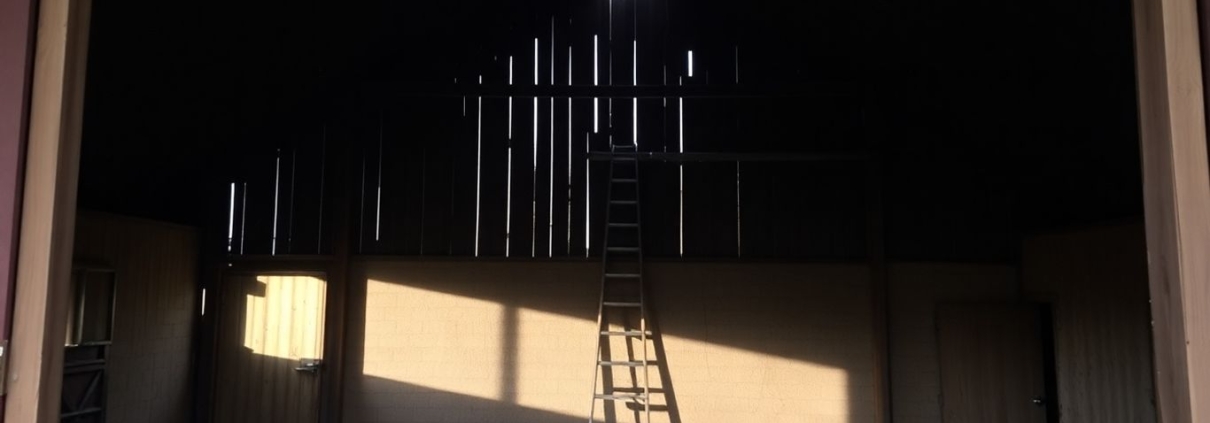
Damaged barn roof with debris on the floor.

Shropshire Firm Penalised £15,000 After Worker Suffers Serious Injuries in Barn Roof Fall

A Shropshire-based construction company has been fined £15,000 following a serious incident where a roofer fell from a barn roof, sustaining fractures to his skull and ribs. The incident occurred on September 2, 2023, during the installation of roof sheets onto a barn under construction in Oswestry. The Health and Safety Executive (HSE) investigated the matter, leading to the prosecution of the firm and its director.

Key Takeaways

  • Dewi Williams Limited fined £15,000 and ordered to pay £2,000 in costs.
  • Company director Dewi Williams received a 12-month conditional discharge and ordered to pay £1,000 in costs.
  • The incident highlights failures in planning and implementing safety measures for work at height.

The Incident

The roofer was working on a barn construction site in Oswestry when the accident happened. He was standing on a newly installed roof sheet, attempting to position the next one, when he lost his footing and fell to the ground. The fall resulted in severe injuries, including fractures to his ribs and skull.

HSE Investigation and Findings

An investigation conducted by the Health and Safety Executive (HSE) revealed significant shortcomings in the company’s safety practices. The HSE found that Dewi Williams Limited had failed to adequately plan the work at height and had not put in place appropriate measures to prevent falls or protect workers. Crucially, company director Dewi Williams was found to be directly involved in the work and permitted it to be carried out in an unsafe manner.

Legal Consequences

Dewi Williams Limited, located in Crickheathe, Oswestry, pleaded guilty to breaches of Regulations 4(1) and 6(3) of the Work at Height Regulations 2005. The company was fined £15,000 and ordered to pay £2,000 in costs.

Company director Dewi Williams also pleaded guilty to the same breaches, under Section 37 of the Health and Safety at Work etc. Act 1974. He received a 12-month conditional discharge and was ordered to pay £1,000 in costs.

HSE Warning on Work at Height

Sara Andrews, an HSE inspector, commented on the case, emphasising the critical importance of thorough risk assessments for all work at height activities. She stated that suitable control measures must be implemented to minimise the risk of falls and injuries. Ms. Andrews concluded that had the work been properly planned and appropriate equipment provided, the incident could have been avoided.

Sources

Construction workers in front of a green city skyline.

New Green Skills Programme Launched to Tackle Construction’s Net-Zero Challenge

A significant new initiative, the Green Accelerator Skills Programme (GRASP), has been launched to address the critical shortage of green skills within the construction industry. This €9.8 million programme, led by South West College and its partners, aims to upskill professionals and businesses in sustainable building practices through a range of funded courses, marking a crucial step towards achieving net-zero targets in the built environment.

Key Takeaways

  • A €9.8 million programme, GRASP, is underway to tackle the green skills shortage in construction.
  • The programme offers approximately 50 funded courses covering areas like Passive House Design, domestic retrofit, and heat pump installation.
  • Industry leaders and educational bodies are collaborating to ensure the workforce is equipped for a sustainable future.
  • There is a recognised gap in green skills across the UK and Scotland, impacting the ability to meet housing and net-zero goals.

Addressing the Green Skills Gap

The construction sector faces a substantial challenge in acquiring the necessary green skills to meet ambitious net-zero targets and housing goals. Reports indicate a significant shortage of skilled labour, with many firms struggling to recruit individuals with the required expertise in sustainable construction and retrofitting. The GRASP programme, supported by PEACEPLUS, is designed to bridge this gap by offering comprehensive training in areas such as Passive House Design, domestic retrofit, air source heat pump installation and maintenance, and digital construction technology.

Industry Collaboration and Future-Proofing

Leading construction firms, including Berkeley Group, Kier, and Balfour Beatty, have partnered with organisations like the Supply Chain Sustainability School to develop and deliver tailored training. This collaborative approach aims to upskill trainers and assessors, ensuring a pipeline of talent entering the sector with relevant net-zero knowledge. The initiative also focuses on providing bespoke sessions for small and medium-sized enterprises (SMEs) to help them develop net-zero strategies and improve operational efficiencies. Professionals involved in the initial GRASP cohort have expressed enthusiasm for the opportunity to deepen their knowledge in sustainable building practices, recognising the essential role these skills will play in shaping energy-efficient homes and reducing the environmental footprint of the built environment.

The Urgency for Upskilling

Leaders in the construction industry are issuing an urgent call for collaboration to address the growing green skills gap. In Scotland, for instance, a significant proportion of green jobs advertised are higher than the UK average, yet the industry still faces a deficit of around 200,000 green-skilled workers across the UK. Experts emphasise that green skills must become a fundamental part of all learning programmes, from an early age. Upskilling the existing workforce is deemed critical, especially given an aging workforce and a lack of understanding of modern, sustainable construction methods. The demand for professionals with green skills is projected to continue rising globally, making such training initiatives vital for future-proofing careers and the sector as a whole.

Sources