Tag Archive for: featured

Autonomous excavator building a car park at Manchester Airport.

UK’s First Autonomous Excavator Revolutionises Manchester Airport Car Park Construction

The UK has witnessed a significant leap in construction technology with the successful trial of the nation’s first autonomous excavator at Manchester Airport. Developed through a collaboration between robotics firm Gravis and contractor Taylor Woodrow, the AI-powered machine is set to transform how car parks and other infrastructure are built.

Key Takeaways

  • The UK’s first autonomous excavator, the SV100-7, has been trialled successfully.
  • The technology uses AI and 3D models to perform digging tasks with high precision.
  • It aims to improve safety, productivity, and address workforce shortages in the construction industry.
  • A qualified human operator will still oversee the machine’s operation.

The Autonomous Excavator In Action

The autonomous excavator, model SV100-7, operates using a sophisticated system mounted on the machine, linked to a tablet and camera. By uploading 3D or CAD models of the desired excavation, the excavator can automatically dig trenches to precise specifications, such as pipelaying standards. During trials, the machine demonstrated its ability to dig trenches without human intervention after the initial command was given, even navigating around pre-existing underground pipes.

Addressing Industry Challenges

Phil Skegg, managing director of Taylor Woodrow, highlighted the technology’s potential to combat persistent issues in the construction sector. “Over the last 10 years our industry safety record has not improved, and our productivity has declined,” he stated. “We believe that increasing the mechanisation and automation of the tasks we undertake on site will help address these problems, removing people from danger, being more productive and improving quality of workmanship.”

Advanced Technology and Safety Features

Gravis CEO Ryan Luke Johns explained the AI’s role in adapting to dynamic ground conditions. “A human does a very good job at adapting to those small nuances in the ground and that’s what we’re doing using AI,” he said. The system uses sensors and hydraulic feedback to understand and adapt to varying soil consistencies, including rocky or frozen ground. Real-time LiDAR mapping allows for precise excavation and autonomous manoeuvring. Crucially, the machine incorporates safety measures, including a safety shield solution with image recognition that triggers loud warnings if a person enters the machine’s proximity, allowing for immediate stops.

The Human Element Remains Crucial

Despite its autonomous capabilities, both Gravis and Taylor Woodrow emphasize that a qualified excavator operator will oversee the machine. This “computer control machine controller” is responsible for uploading models and initiating the digging process, ensuring a human remains in the loop for critical decisions and safety oversight.

Future Deployment

Following extensive trials and refinements over several weeks, the autonomous excavator is slated for deployment on a live construction site at Manchester Airport, specifically for the Clough Bank B car park project. Gravis anticipates the SV100-7 will move into commercial testing in 2026. Taylor Woodrow is also exploring other autonomous machinery, including a drilling robot at a site in Newcastle.

Sources

Luton town centre development with construction cranes.

Luton’s £120m Town Centre Project Poised for Revival After Regulatory Hurdles

A significant ray of hope has emerged for Luton’s stalled £120 million town centre regeneration scheme, with work potentially resuming in January 2026. The project, known as ‘The Stage’, has been on hold pending crucial approval from the Building Safety Regulator (BSR) under the post-Grenfell safety regime. Officials are optimistic that regulatory sign-off is imminent, paving the way for the completion of nearly 300 homes and vital community facilities.

Key Takeaways

  • Work on the £120m Luton town centre regeneration scheme is anticipated to restart in January 2026.
  • Resumption is contingent on final approval from the Building Safety Regulator (BSR).
  • The project includes residential towers, mixed-use retail space, and a performance venue.
  • A £20m government Levelling Up grant must be utilised by 2026.

Project Set to Resume Pending Regulator Approval

Roger Kirk, director of property and infrastructure at Luton Borough Council, indicated a positive shift in relations with the BSR, stating a “constructive and open relationship” is now in place. He expressed confidence that the regulator would grant stage two sign-off by November 7th, enabling work to recommence on January 5th, 2026. The main contractor, Willmott Dixon, has been working closely with the council to manage costs during the delay and is eager to begin the “exciting and important project for Luton.”

Overcoming Building Safety Concerns

The delay in the project, which includes two residential towers offering nearly 300 homes, a mixed-use building, retail space, and a performance venue, has been attributed to the stringent requirements of the post-Grenfell building safety regulations. The BSR acknowledged “significant progress in resolving the outstanding concerns” and is moving towards a “positive outcome.” However, a final decision hinges on ongoing discussions between the BSR and Bedfordshire Fire and Rescue Service.

Funding and Government Support

The scheme benefits from a £20 million government Levelling Up grant, which has a deadline for expenditure by 2026. While concerns were raised about maintaining this funding, councillors were assured that the Department for Levelling Up, Housing and Communities is aware of the delays and has demonstrated flexibility regarding timelines. Previously, Luton Council had expressed frustration with the BSR’s responsiveness, but the regulator defended its position, noting that initial applications had fallen below the required standard. The BSR is reportedly on track to clear its backlog of similar legacy applications by January 2026.

Sources

George Hotel

Kirklees Council Approves George Hotel Redevelopment Amidst Victorian Society Objections

Kirklees Council has controversially granted itself planning permission for the £30 million redevelopment of the historic George Hotel. Despite objections from the Victorian Society regarding the modern design of new extensions, the council proceeded with the approval, arguing the objection did not meet the legal threshold for referral to the Secretary of State.

Key Takeaways

  • Kirklees Council approved its own planning application for the George Hotel redevelopment.
  • The Victorian Society raised concerns about modern extensions being out of keeping with the historic area.
  • The council determined the objection did not legally require referral to the Secretary of State.
  • The revised plans increase the hotel’s capacity to 108 bedrooms and aim for a 2026 opening.
  • Radisson Group remains committed to operating the hotel under its Radisson RED brand.

Planning Permission Granted

The council’s planning department initially intended to grant approval for the revised plans. These revisions became necessary when it was discovered that the John William Street wall required costly underpinning, leading to its demolition and the construction of new extensions. This change also allowed for an increase in the number of bedrooms from 90 to 108, enhancing the hotel’s potential profitability.

Victorian Society’s Concerns

The Victorian Society expressed that the proposed modern extensions on the John William Street side were “too modern and out-of-keeping with surrounding historic architecture” and “does not reflect Huddersfield.” However, their objection did not explicitly request a referral to the Secretary of State, a condition required by planning law for such objections from national amenity societies to necessitate a government review when the applicant is also the planning authority.

Council’s Decision and Rationale

Following advice from civil servants on the definition of an “objection” under the Planning (Listed Buildings and Conservation Areas) Regulations 1990, Kirklees Council concluded that the Victorian Society’s objection did not trigger the mandatory referral. The council sought clarification from the society, which confirmed they did not wish to refer the decision to the Secretary of State, despite still holding an objection to the works.

Project Details and Future Outlook

The redevelopment aims to transform the Grade II*-listed building into a Radisson RED hotel. Clr Graham Turner, Cabinet member for finance and regeneration, hailed the decision as “another major milestone” for a “treasured landmark” that will play a key role in supporting the local economy. The council anticipates the new hotel will open within the next two years. Opposition councillors, however, continue to call for more detailed financial information regarding the £30 million investment and the repayment timeline for council taxpayers.

Stakeholder Support

Historic England, while expressing concerns about the extensions, stopped short of a formal objection and remains supportive of the redevelopment. Huddersfield Civic Society also supports the hotel’s restoration but suggested the new design could have been more sensitive to the original character of the building. The Radisson Group is reportedly still on board, with a deal signed in March 2023.

Sources

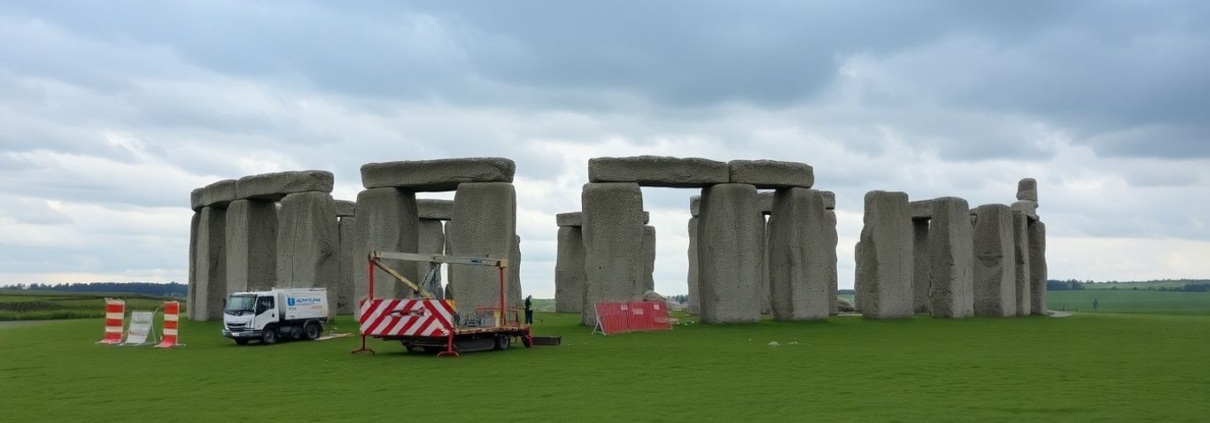
Stonehenge monument with construction barriers and equipment nearby.

Stonehenge Tunnel Project Officially Scrapped by UK Government

The UK government has officially revoked the Development Consent Order (DCO) for the controversial A303 Stonehenge Tunnel project. This decision effectively ends the long-debated plan to build a tunnel near the ancient monument, citing “exceptional circumstances” for the revocation. The move follows a suspension of the project in July 2024 by the new Labour government due to budgetary concerns.

Key Takeaways

  • The UK government has formally revoked the Development Consent Order (DCO) for the A303 Stonehenge Tunnel.
  • The decision was made by Transport Secretary Heidi Alexander, citing “exceptional circumstances.”
  • The project, estimated to cost £2 billion, was previously suspended by the Labour government in July 2024.
  • Campaigners have long argued the tunnel would cause irreversible harm to the Stonehenge World Heritage Site.

A Controversial History

The Stonehenge Tunnel project, officially known as the “A303 Amesbury to Berwick Down Improvement,” has faced significant opposition and legal challenges for years. The plan involved constructing an 1.8-mile road tunnel to reroute the busy A303 away from the iconic standing stones. However, heritage groups and archaeologists warned that the tunnel and associated roadworks would cause “permanent, irreversible harm” to the Stonehenge World Heritage Site and its wider ritual landscape.

Despite these concerns, the previous Conservative government granted consent for the project in July 2023. This decision was a redetermination after an earlier DCO granted by Grant Shapps in November 2020 was ruled unlawful by the High Court in October 2022. The High Court had found the decision to be “unlawful,” and the DCO was sent back for re-determination, eventually being granted again by then-Transport Secretary Mark Harper, against the advice of the Planning Inspectorate.

Reasons for Revocation

The Labour government, upon taking office, paused the project in July 2024, citing budgetary constraints and the project being “unfunded or unaffordable.” The official revocation order, published by the Department for Transport, cites “exceptional circumstances” without further elaboration. However, the decision aligns with the government’s broader review of infrastructure projects and a commitment to fiscal responsibility.

Campaigners, including the Stonehenge Alliance, have welcomed the government’s decision. Tom Holland, president of the Stonehenge Alliance, described the project as a “monstrous project” and expressed relief that it has been cancelled, also noting the significant cost savings of approximately £2.5 billion.

International Concerns and Archaeological Discoveries

International bodies, including UNESCO’s World Heritage Committee, had repeatedly expressed concerns about the potential negative impact of the tunnel on the “Outstanding Universal Value” of the Stonehenge World Heritage Site. Archaeological discoveries in recent years, revealing a vast ritual landscape surrounding Stonehenge, further amplified these concerns, with experts arguing that tunneling would cause irreparable damage to these significant findings.

The Department for Transport is currently consulting on the proposed revocation, with representations accepted until November 21. This move effectively halts any future attempts to proceed with the tunnel construction, preserving the integrity of the ancient monument and its surrounding landscape.

Sources

Construction site with machinery and workers at Atlantic Park.

Winvic Construction Breaks Ground on £42m Second Phase of Liverpool’s Atlantic Park Logistics Hub

Winvic Construction has commenced work on the second phase of the Atlantic Park logistics hub in Bootle, Liverpool. This £42 million development follows the successful completion of the first phase, further expanding the 52-acre site into a significant logistics and manufacturing centre within the Port of Liverpool Freeport zone. The project is set to deliver state-of-the-art facilities and create substantial employment opportunities for the region.

Key Takeaways

  • Winvic Construction has begun the £42 million second phase of Atlantic Park.
  • The first phase, valued at £36 million, has been completed, delivering four industrial units.
  • The entire 52-acre site, formerly occupied by Rolls-Royce, will offer 800,000 sq ft of industrial space upon completion.
  • The development is designed with sustainability at its core, targeting net-zero carbon in operation.
  • The project is expected to support over 1,100 jobs during its construction phase.

Phase Two Commences

Winvic Construction has officially started work on the £42 million second phase of Atlantic Park, a major logistics and manufacturing hub located in Bootle, Liverpool. This new phase will deliver an additional 420,000 sq ft of commercial space across three purpose-built units, with sizes ranging from 53,750 sq ft to 216,000 sq ft. Completion of this phase is anticipated in the summer of 2026.

Successful First Phase Completion

The commencement of phase two follows the practical completion of the £36 million first phase by Winvic. This initial stage saw the delivery of four industrial units totalling 350,000 sq ft, with unit sizes varying from 3,700 to 11,600 square metres. These units were designed to meet the evolving needs of occupiers and investors, featuring high haunch heights, large service yards, and two-storey office spaces. The first phase also incorporated new services, separate concrete service yards, an access road, landscaping, and electric vehicle charging points.

Strategic Location and Sustainability

Atlantic Park is strategically situated on a 52-acre site, formerly the Rolls-Royce Engineering works, within the Port of Liverpool Freeport zone. Its location offers excellent connectivity, being just over two miles from the Port of Liverpool and close to the M57 and M58 motorways, making it ideal for national and international logistics operations. The development is being delivered in line with Royal London Asset Management’s (RLAM) sustainability strategy, which aims for net-zero carbon in operation by 2030. Winvic is undertaking the second phase as a net-zero-carbon-in-construction scheme, utilising its independently verified Life Cycle Assessment methodology.

Economic Impact and Job Creation

This significant development is projected to inject £62.9 million annually into the Liverpool city region economy. During the construction of phase two alone, the project is expected to support over 1,100 jobs, including the creation of approximately 140 new roles. Winvic is actively implementing an employment and skills plan, collaborating with local authorities and educational institutions to provide career talks, work experience placements, and local employment and training opportunities, further benefiting the community.

Future Outlook

Upon full completion, Atlantic Park will provide a total of 800,000 sq ft of high-quality industrial space. The development is designed to attract leading occupiers from the logistics and manufacturing sectors, contributing to regional growth and reinforcing Liverpool’s position as a key hub for supply chains. Both RLAM and Winvic have expressed enthusiasm for the project’s potential to deliver long-term value and support the next generation of businesses.

Sources

UK data centres, digital growth, financial investment, futuristic cityscape.

UK Data Centre Spending Set to Skyrocket Past £10 Billion Annually by 2029

Spending on new data centres in the UK is projected to surge dramatically, exceeding £10 billion per year by 2029. This represents a more than fourfold increase from the current annual total of £1.75 billion, according to new analysis from construction data firm Barbour ABI. This significant growth is primarily fuelled by the escalating demand for artificial intelligence and Internet of Things infrastructure, with nearly 100 new facilities currently in various stages of the planning process.

Key Takeaways

  • UK data centre spending is forecast to surpass £10 billion annually by 2029.
  • This growth is driven by AI and IoT demand, with numerous new facilities planned.
  • Investment is expanding beyond London and the South East to regions with lower costs and cooler climates.
  • Challenges such as rising energy costs, planning hurdles, and labour shortages could impact expansion.
  • Environmental impact and transparency in energy usage are growing concerns for the sector.

Market Growth and Shifting Investment

By 2029, the data centre market is expected to rival the education and industrial construction sectors, which are predicted to reach £10.5 billion and £10.7 billion respectively. While new office construction is forecast to be worth £18.4 billion, infrastructure (£48.2 billion) and residential (£70.4 billion) are expected to remain larger markets.

Traditionally dominated by London and the South East, new data centre projects are increasingly being planned in the North, East of England, and Wales. These regions offer advantages such as cheaper land and cooler ambient temperatures, making them more attractive for large-scale developments. Government initiatives, including AI Growth Zones and regional development policies, are also playing a crucial role in attracting investment to non-metropolitan areas, with Barbour ABI anticipating over £25 billion in inward investment over the next five years.

Challenges and Environmental Considerations

Ed Griffiths, head of business and client analytics at Barbour ABI, highlighted that operators are investing in hyperscale facilities outside urban centres to manage immense computing workloads. However, he cautioned that rising energy costs, planning complexities, and labour shortages could impede this rapid expansion. Furthermore, concerns are mounting regarding transparency and the environmental footprint of these energy-intensive facilities.

“Data centres are now recognised as critical national infrastructure,” Griffiths stated. “But given the immense power they consume, operators will come under growing pressure to adopt greener practices. There is currently no requirement to report energy usage publicly, so it will be difficult to hold firms to account.”

The report stresses that while many companies are committing to renewable energy sources and energy-efficient technologies, sustainability must become an integral part of long-term strategic planning to mitigate potential environmental consequences. Recent significant investments, such as plans by Microsoft and Blackrock to invest billions in UK data centre infrastructure, underscore the sector’s rapid growth trajectory.

Sources

New leisure centre construction altering Trowbridge town skyline.

Trowbridge’s New Leisure Centre Takes Shape, Altering Town Skyline

Trowbridge’s skyline is undergoing a significant transformation as construction on the new £25 million leisure centre rapidly progresses. The modern facility, located on Bythesea Road near County Hall, is set to become a central hub for health, wellbeing, and community connection upon its completion.

Key Takeaways

  • The steel frame, comprising over 993 pieces and weighing approximately 246 tonnes, is now a visible feature of the town’s landscape.
  • Construction began on April 7, with Pellikaan Construction leading the build.
  • The centre will feature a six-lane swimming pool, learner pool, fitness studios, a gym, café, and adventure play area.
  • Sustainability is a key focus, with solar panels and energy-efficient design to support the council’s carbon-neutral target.

Construction Milestones Reached

Work on the new leisure centre commenced on April 7, with Pellikaan Construction at the helm. The initial phase involved extensive groundwork, including the complex task of mapping, removing, or diverting existing underground services and pipework. Following this, excavation began for the main swimming pool and learner pool areas. Recent progress shows the growing steel structure, a significant addition to Trowbridge’s skyline, with staircases already erected on site.

A Transformative Community Asset

Councillor Mel Jacob, cabinet member for Communities, Engagement, and Corporate Services, expressed excitement about the project’s advancement. “After months of essential groundwork, we’re now entering the phase where the vision becomes a reality, and the people of Trowbridge can really start to see their new leisure centre take shape,” she stated. Councillor Jacob highlighted the centre’s potential to be a “transformative asset,” offering modern, accessible facilities designed to promote health, wellbeing, and social interaction for the town and surrounding communities.

Modern Facilities and Sustainable Design

Once fully constructed, the leisure centre will boast a six-lane, 25-metre swimming pool, a dedicated learner pool, two fitness studios, a gym equipped with 120 stations, a café, and an adventure play area. A special “Live Well” suite will cater to older adults, promoting active lifestyles across all age groups. Reflecting Trowbridge’s industrial heritage, the centre’s modern design will feature glazed facades and a prominent entrance. In line with Wiltshire Council’s commitment to being carbon neutral by 2030, the building incorporates a “fabric first” approach for energy efficiency, with solar panels planned for available roof space to power the all-electric facility. External landscaping will further enhance the environment, incorporating walking, cycling, and wheeling routes.

Future Updates

Pellikaan Construction and development partner Alliance Leisure are overseeing the build. Further updates on the project’s progress will be made available to the public as construction continues.

Sources

WW Martin team celebrating record profits with champagne.

WW Martin Celebrates Record Profits Amidst Continued Growth

Kent-based construction firm WW Martin, a company with a rich history spanning 148 years, has announced a significant surge in profits, underscoring its sustained successful growth trajectory. The company, operating across multiple brands including WWM Civils and KRS Interiors, has seen its turnover climb by 17 per cent year-on-year.

Key Takeaways

  • WW Martin reports a 17% increase in turnover to £60.8m for the 12 months ending February 2025.
  • Gross profit rose by 12% to £9.1m, with operating profit reaching £4.3m.
  • The company maintains strong relationships with public sector clients, including a recent £96m contract.

Financial Performance Highlights

WW Martin has achieved a turnover of £60.8 million for the fiscal year ending February 28, 2025. This represents a robust 17 per cent increase compared to the previous year. The company’s financial health is further demonstrated by a 12 per cent rise in gross profit, reaching £9.1 million, and an operating profit of £4.3 million.

Diverse Sector Involvement

The construction contractor delivers projects exceeding £60 million annually, serving a variety of key sectors. These include education, residential development, commercial and industrial projects, and the healthcare industry. This diversification contributes to the company’s stable and expanding market presence.

Strategic Partnerships and Future Outlook

WW Martin has cultivated strong framework agreements with prominent public sector clients. Notable partnerships include Kent County Council, Hyde Housing, and East Kent Hospitals University NHS Foundation Trust. The firm recently secured a significant four-year contract valued at £96 million with the latter, highlighting the trust and reliability it offers.

Director Ian Posnett commented on the company’s success, stating, “WW Martin continues to go from strength to strength and is led by a strong leadership team.” He attributed the performance to “the strength of our people, our strategic focus and our commitment to delivering lasting impact.” The company prides itself on a high-quality, non-adversarial approach, which has led to a high volume of repeat negotiated work. WW Martin is optimistic about future opportunities, aiming to build a resilient and sustainable future.

Sources

Construction of Edinburgh's new concert venue.

Edinburgh’s New ‘Hall for All’ Concert Venue Construction Contract Signed

Construction on Edinburgh’s highly anticipated Dunard Centre, a new purpose-built concert hall, is set to commence within weeks following the signing of a £162 million contract with Balfour Beatty. This significant milestone, bolstered by a £40 million funding boost, brings the city closer to realizing its first new concert hall in over a century. The “hall for all” is slated for completion by 2029.

Key Takeaways

  • A £162 million construction contract has been signed with Balfour Beatty for the Dunard Centre.
  • The project received a crucial £40 million funding boost, including a £20 million pledge from the Scottish Government matched by philanthropist Carol Colburn Grigor.
  • The 1,000-seat venue will be home to the Scottish Chamber Orchestra and a new venue for the Edinburgh International Festival.
  • Completion is expected by 2029, with the venue aiming to attract 200,000 visitors annually and support nearly 300 jobs.

A New Cultural Hub For Edinburgh

The Dunard Centre, designed by David Chipperfield Architects and Reiach and Hall Architects, will be situated on a cleared site behind the historic Royal Bank of Scotland branch on St Andrew Square. This 1,000-seat venue is envisioned as a versatile space capable of hosting all genres of music, providing a permanent home for the Scottish Chamber Orchestra and serving as a new venue for the Edinburgh International Festival.

Funding Boost Secures Project Future

The project reached a critical juncture with an in-principle pledge of an additional £20 million from Scotland’s First Minister John Swinney. This significant contribution was matched pound-for-pound by philanthropist Carol Colburn Grigor, unlocking vital funding for the construction. IMPACT Scotland, the charity responsible for delivering the hall, highlighted the importance of this funding in making the project a reality.

Jo Buckley, chief executive of the Dunard Centre, expressed her enthusiasm, stating, “This is a huge milestone for the Dunard Centre, and an historic moment for the city, which has looked forward to this new venue for many years.” She further emphasized the long-lasting impact the investment will have on the people of Scotland.

Collaborative Investment and Economic Impact

The Dunard Centre is part of the Edinburgh and South East Scotland City Region Deal. This initiative has already seen commitments of £10 million each from the Scottish and UK governments, alongside £5 million from the City of Edinburgh Council. To date, IMPACT Scotland has successfully raised over £100 million through private philanthropy.

First Minister John Swinney welcomed the contract signing, calling it “the next step towards the establishment of an exciting new cultural venue in the heart of Scotland’s capital.” He added that the Scottish Government is “proud to support the Dunard Centre in recognition of its potential to significantly boost Edinburgh’s cultural offering.”

The venue is expected to be the first in the UK to feature acoustics designed by Japanese firm Nagata Acoustics. Projections indicate that the Dunard Centre will attract approximately 200,000 visitors annually, support nearly 300 jobs, and contribute an estimated £8.6 million per year to the local economy.

Scotland Office minister Kirsty McNeill acknowledged the project’s significance, stating, “The UK Government recognises the significance of the Dunard Centre to Edinburgh’s cultural landscape and welcomes this progress towards delivery.”

At its peak, the construction project is anticipated to employ around 200 people. IMPACT Scotland chairman Ronnie Bowie expressed his anticipation for the collaboration with Balfour Beatty and other stakeholders to create a space that “really will offer something for everyone.”

Sources

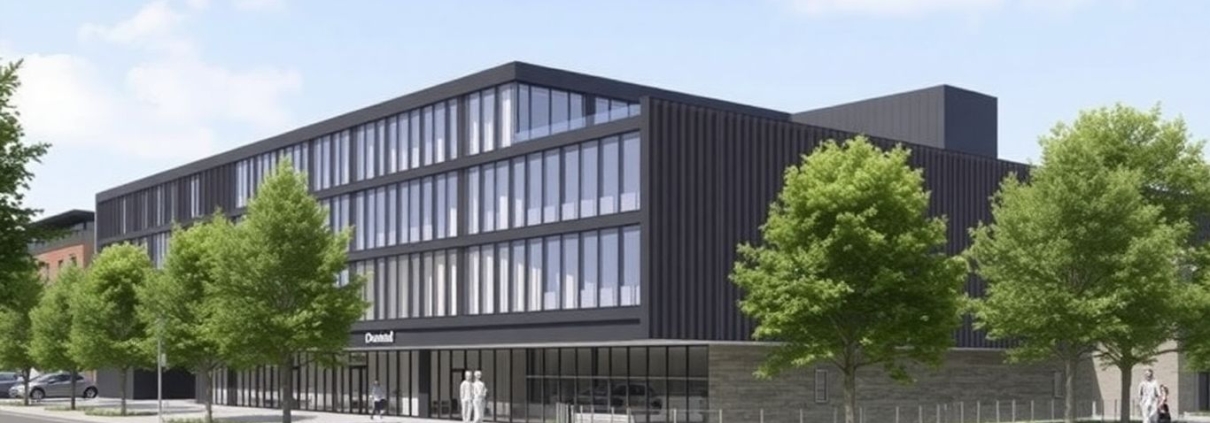
Modern architectural rendering of the Dunard Centre, Edinburgh.

Balfour Beatty Secures £162 Million Contract for Edinburgh’s New Dunard Centre

Balfour Beatty has been awarded a significant £162 million contract by IMPACT Scotland to construct the Dunard Centre, a state-of-the-art concert hall set to become Edinburgh’s first purpose-built music venue in over a century. The project, located behind St Andrew Square, promises to be a major cultural landmark.

Key Takeaways

  • Balfour Beatty appointed as main contractor for the £162 million Dunard Centre.
  • The venue will feature a 1,000-seat auditorium and house the Scottish Chamber Orchestra.
  • Construction is set to begin in the coming weeks, with completion anticipated in 2029.
  • The project aims to create new apprenticeship roles and support local SMEs.

A New Cultural Hub For Edinburgh

The Dunard Centre will boast a 1,000-seat auditorium, designed with world-class acoustics through the use of solid oak panelling internally. Beyond the main performance space, the venue will include a café, bar, and flexible areas suitable for a variety of events. A complex double-level in-situ concrete basement will accommodate performer facilities and essential back-of-house operations. The main structure will comprise a five-storey steel frame, clad in pre-cast concrete panels.

Project Development and Timeline

Balfour Beatty’s appointment follows an intensive 18-month early contractor involvement (ECI) phase. During this period, the company collaborated closely with IMPACT Scotland and the project team to address the complexities of building on a constrained city centre site, focusing on buildability and sequencing. Main construction is scheduled to commence in the coming weeks, with the project expected to be completed in 2029. At its peak, the construction site will employ approximately 200 operatives.

Previous Contractor and Funding

This project was previously slated for Sir Robert McAlpine, which had been involved in preconstruction work since 2019. However, that arrangement concluded in 2022 due to a revised design and procurement strategy. The project has also benefited from additional funding, including an in-principle pledge of £20 million from Scotland’s First Minister John Swinney, matched by US philanthropist Dr. Carol Colburn Grigor. The Dunard Centre is part of the Edinburgh & South East Scotland City Region Deal, with contributions from the Scottish and UK governments, and the City of Edinburgh Council, alongside significant private philanthropy.

Community and Economic Impact

Balfour Beatty is committed to creating at least five new apprenticeship roles and supporting ongoing SVQ Modern Apprenticeships, fostering skills development within the construction sector. A local supply chain strategy will prioritise Scottish small and medium-sized enterprises (SMEs), with 4D digital planning tools employed to optimise coordination and minimise disruption in the busy city centre. Once operational, the Dunard Centre is projected to attract around 200,000 visitors annually and will serve as the permanent home for the Scottish Chamber Orchestra and a key venue for the Edinburgh International Festival.

Sources