Tag Archive for: featured

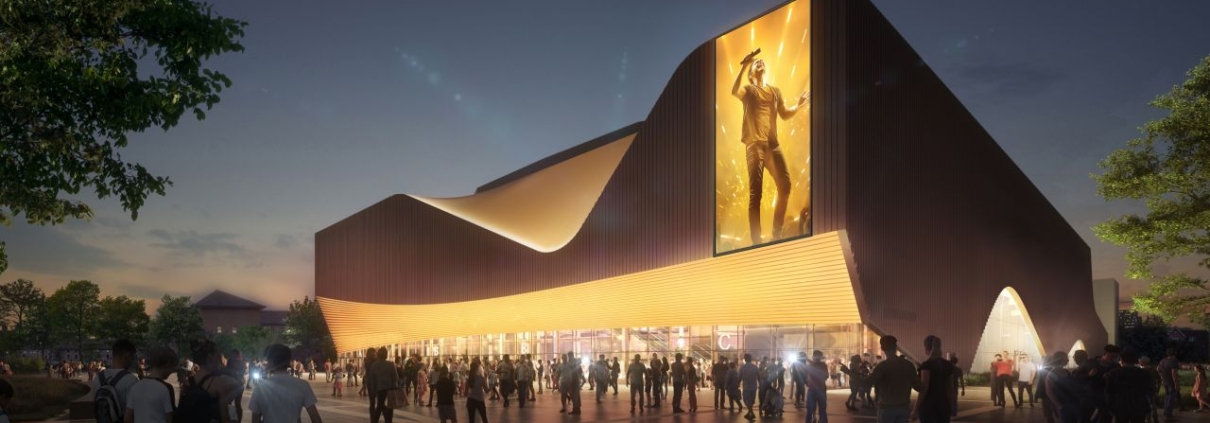
Modern indoor arena at night with city backdrop

McLaren Set to Transform Cardiff with £300m Indoor Arena at Atlantic Wharf

Cardiff saw a significant milestone this week as work commenced on the city’s long-awaited £300 million indoor arena at Atlantic Wharf, following news that McLaren Construction has secured the flagship scheme. Set to open in 2028, the development promises to reshape the music, entertainment, and cultural profile of the Welsh capital.

Key Takeaways

  • McLaren Construction appointed main contractor for £300m Cardiff Arena
  • The project will deliver a 16,500-capacity venue and 182-room hotel
  • Scheduled for completion in 2028, the arena will anchor the Atlantic Wharf regeneration
  • Over 1,000 jobs to be created during construction and operation
  • Arena expected to attract more than a million visitors a year

A New Landmark for Cardiff Bay

The Cardiff Arena development is a centrepiece of the city’s ambitious Atlantic Wharf masterplan. Backed by Cardiff Council alongside partners Live Nation and Robertson Property, the plan extends far beyond the arena itself. Alongside the major events venue, the regeneration will see new cultural venues, offices, homes, a four-star hotel, leisure spaces, and public squares emerge over 30 acres in Cardiff Bay.

Designed by the architectural firms Populous and HOK, with interiors by Jump Studios, the arena draws inspiration from Cardiff Bay’s industrial past. Its distinctive, swooping façade features patinated corrugated panels and gold-toned accents, while generous glazing evokes the natural landscape of South Wales.

A Boost for Jobs and Cultural Profile

The arena will generate around 1,000 new jobs during its build and ongoing operation, supporting both skilled trades and long-term roles in hospitality and events. Once operational, it is predicted to attract over a million visitors annually, firmly establishing Cardiff as a major destination for international touring acts and cultural events.

Importantly, the seating bowl has been engineered for a compact footprint with sightlines and a crowd experience prioritised. Hospitality seating is integrated within the main arena, fostering a unified atmosphere among all guests.

Economic and Community Impact

City officials and project leaders highlight the transformative potential of the development for Cardiff’s economy and social landscape. Cardiff Council’s leader called it the most significant investment since the city’s stadium opened in 1999, underlining its importance for the region’s visitor economy, local business, and creative sector. The project also aligns with Cardiff’s Music City strategy, ensuring broad benefits from musicians and promoters to businesses and local communities.

Robertson Group and Live Nation echoed these sentiments, describing the arena as a “catalyst for growth” that will support regeneration in one of Wales’ most deprived areas, while also elevating Cardiff as a creative and entertainment powerhouse.

Looking Ahead

Rising construction costs—driven by inflation—mean the value of the scheme now tops £300 million. Major subcontractors have been named for groundworks, steelwork, piling, envelope, and MEP packages, reflecting the scale and complexity of the project.

With ground broken and main construction underway, Cardiff Arena is on track to become a new icon for Wales, reinforcing the city’s place on the world stage and promising lasting benefits for generations to come.

Further Reading

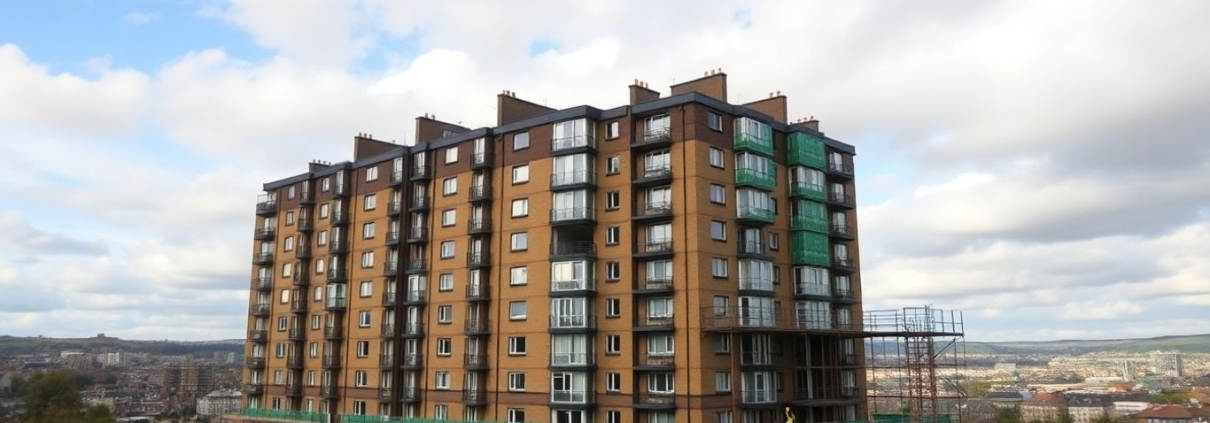
Edinburgh Banana Flats with scaffolding and green construction activity

Edinburgh’s Iconic ‘Banana Flats’ to Undergo £69m Eco Retrofit After Council Approval

Edinburgh City Council has received the green light to embark on an ambitious £69 million retrofit project for the city’s landmark mid-century housing blocks, Cables Wynd House and Linksview House, in Leith. The retrofitting aims to modernise the listed buildings, improve living standards, and set new benchmarks for energy efficiency in Scottish social housing.

Key Takeaways

  • £69m retrofit of Cables Wynd House and Linksview House, both Category A-listed.
  • Major upgrades to energy efficiency, fire safety, and resident security standards.
  • Collaborative delivery involving architects, engineers, and resident input.

Landmark Homes to Receive Modern Transformation

Known locally as the “Banana Flats” because of Cables Wynd House’s distinctive shape, the two buildings together house around 310 families, mostly in social-rented accommodation. Built in the 1960s, these structures have gained recognition for their post-war architectural significance, and are now celebrated for their bold style and cultural value within the Leith community.

Upgrades Target Energy, Safety, and Comfort

The comprehensive overhaul will include:

  • Insulation and Heating: Substantial improvements to insulation and installation of energy-efficient heating systems to meet the rigorous Scottish Energy Efficiency Standard for Social Housing (EESSH2).
  • Windows and Roofs: Modern, thermally efficient windows and brand new roofing.
  • Fire Safety: New sprinkler systems, upgraded fire-fighting lifts, and enhanced smoke ventilation throughout both towers.
  • Safety and Access: Improvements to external and internal lighting, CCTV coverage, and building access controls.

Additionally, the council will introduce new waste management solutions and revamp entryways, making the blocks more accessible and secure for all residents.

Emphasis on Community Involvement

A distinctive aspect of the project is its resident engagement. Consultation cycles, design feedback sessions, and neighbourhood meetings ensured that tenants’ voices informed every key stage. Residents identified persistent issues like draughts, poor insulation, unreliable heating, and accessibility concerns. These have been prioritised in the final designs with a focus on making homes warmer, healthier, and safer.

Creating Greener, More Liveable Neighbourhoods

The outdoor areas will also see significant enhancements. Plans include new play spaces for children, wildflower meadows to promote biodiversity, and sustainable drainage installations. Parking and communal waste facilities will also be improved, reflecting a holistic approach to community regeneration.

Setting A Precedent For Listed Block Retrofits

With a multidisciplinary team—including architects, engineers, and energy consultants—this project will demonstrate how Scotland’s historic housing stock can be elevated to modern standards without compromising architectural integrity. Council leaders express hope that the retrofit could become an exemplar for similar listed block upgrades nationwide, showcasing sustainable transformation while preserving community heritage.

Further Reading

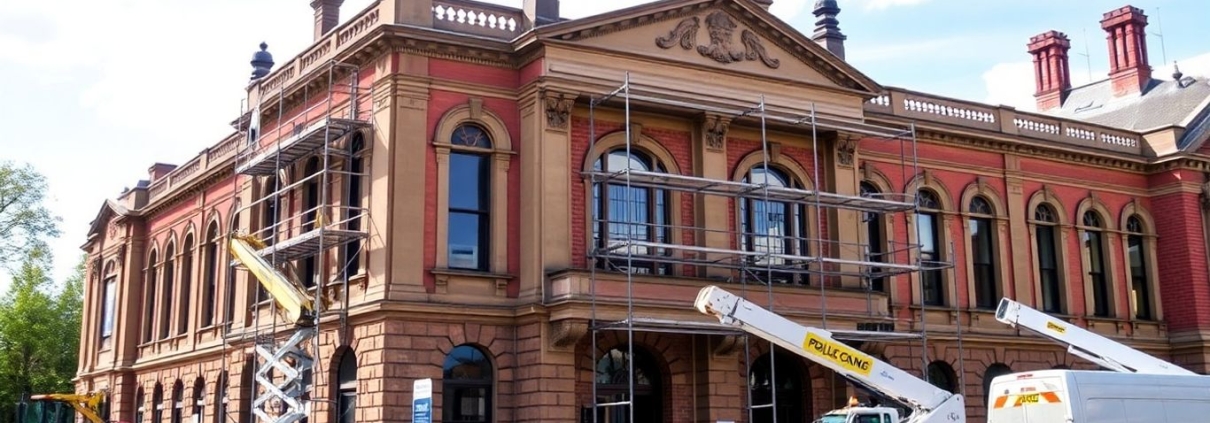
Wolverhampton police station under renovation with scaffolding.

Wolverhampton’s Iconic Police Station Gets £9m Makeover: A Modern Transformation Begins

Wolverhampton Central Police Station, an iconic building opened by Princess Diana in 1992, is undergoing a £9 million refurbishment led by Henry Brothers Construction. This long-awaited upgrade promises to modernise facilities, enhance community support, and bring a significant boost to the local economy, all while keeping the station open and fully operational.

Key Takeaways

  • £9 million refurbishment underway at Wolverhampton Central Police Station
  • Works led by Henry Brothers Construction and set to last 16 months
  • Station remains open and serving the community throughout the revamp
  • Improvements include new victim care facilities, energy upgrades, and a community-focused café

Refurbishment Aims To Future-Proof Policing

The 1992-built station has remained largely unchanged for over three decades. Now, essential updates are being made to safeguard its long-term future. The upgrades feature new windows, state-of-the-art heating and cooling systems, leak and damp repairs, enhanced insulation, installation of solar panels, and energy-efficient LED lighting. Additionally, advanced safety and security measures will ensure the premises are fit for modern policing.

Enhanced Victim Care And Staff Facilities

A major focus of the refurbishment is the creation of new victim care rooms and improved staff areas. West Midlands Police leadership emphasises that victim support has become increasingly central to modern policing. The changes will provide officers with a more modern workplace and improve the quality of services offered to those in need.

Community Investment And Local Opportunities

The project prioritises local economic benefits. Henry Brothers Construction is utilising local contractors and apprentices, thus channelling a significant portion of the investment back into the community. Financial support for the scheme is a result of smart estate management, energy savings, robotics, and AI enhancements in police processes, ensuring every penny is spent efficiently.

A new on-site café will be established, managed by a local non-profit. This initiative will offer employment and training opportunities to disadvantaged individuals, including those experiencing homelessness, disabled people, and those lacking formal qualifications—mirroring successful models already in use elsewhere in the region.

Minimising Public And Policing Disruption

Despite the scale of works, operational continuity is a top priority. Some policing teams have relocated temporarily to nearby stations in Wednesfield and Bilston, but Wolverhampton Central will remain open to the public. Police leadership has committed to maintaining uninterrupted service throughout the project’s 16-month timeline.

A Pledge To Modern, Neighbourhood-Focused Policing

The investment demonstrates a clear commitment to the future of community policing in the West Midlands. By securing state-of-the-art, accessible facilities, the project aims to ensure police officers and staff have the resources they need, while strengthening support for victims and the wider public.

Sources

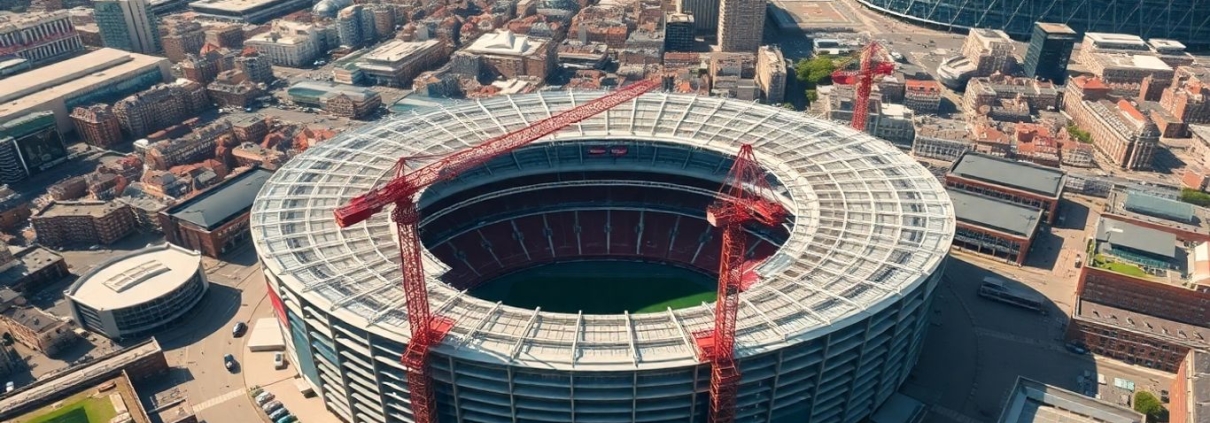
Emirates Stadium expansion construction aerial view

Arsenal Lay Groundwork for 80,000-Seat Emirates: Ambitious Stadium Expansion Plans Revealed

Arsenal Football Club have initiated plans for a major redevelopment of Emirates Stadium, eyeing a dramatic increase in capacity to potentially up to 80,000 seats. With escalating demand from fans and a need to keep pace with rivals, the Gunners are exploring the biggest transformation in the club’s modern era.

Key Takeaways

  • Arsenal are considering expanding Emirates Stadium to 80,000 seats
  • Plans are at a preliminary stage, with various designs under review
  • A major capacity boost would restore Emirates’ position as London’s largest club ground
  • The project could cost around £500 million and may require a temporary relocation

Background: Why Emirates Expansion Now?

Since its 2006 opening, Emirates Stadium has boasted a capacity of just over 60,000. However, recent years have seen North London rivals Tottenham Hotspur open a larger modern ground, and West Ham’s London Stadium also surpass the Emirates’ size. With over 100,000 fans on Arsenal’s season ticket waiting list, the club’s owners have recognised the need for more seats and enhanced facilities, ensuring Arsenal remain competitive on and off the pitch.

Expected Benefits for Arsenal

A jump to a possible 80,000 seats would see Emirates return to the top of London’s football venues, overtaking both Tottenham and West Ham. The potential revenue gains from increased ticket and hospitality sales could be substantial, echoing the financial successes of recent stadium redevelopments at clubs like Real Madrid. This will support Arsenal’s ambitions domestically and in Europe while offering more fans the chance to experience matchdays.

Potential Designs and Construction Challenges

The Emirates’ current bowl shape was designed with future expansions in mind but still presents logistical hurdles. The redevelopment could involve adding seating tiers or redeveloping one end of the ground, subject to planning approval and overcoming the area’s space constraints, such as proximity to residential blocks and transport routes. Complexities may result in an extended construction period, reportedly costing up to £500 million.

Temporary Relocation and Timelines

As the plans are likely to disrupt matches, Arsenal may need a temporary home, with Wembley Stadium identified as the most probable substitute venue. However, the club must consider competition for Wembley from other teams like Chelsea, who are also exploring stadium upgrades. There is currently no definitive timeline, but construction is not expected to begin before the end of the 2026/27 season.

Fan Reactions and Board Leadership

Initial fan response has been largely enthusiastic, seeing the move as a statement of intent matching Arsenal’s on-field ambitions. The ownership group, guided by figures with significant real estate development experience, is involved from the start, indicating the seriousness of the project.

Emirates Stadium’s expansion promises to be a defining moment in Arsenal’s modern history, providing a legacy for future generations while reinforcing their presence among Europe’s elite both on and off the pitch.

Sources