Tag Archive for: Trending

Construction workers in front of a green city skyline.

New Green Skills Programme Launched to Tackle Construction’s Net-Zero Challenge

A significant new initiative, the Green Accelerator Skills Programme (GRASP), has been launched to address the critical shortage of green skills within the construction industry. This €9.8 million programme, led by South West College and its partners, aims to upskill professionals and businesses in sustainable building practices through a range of funded courses, marking a crucial step towards achieving net-zero targets in the built environment.

Key Takeaways

  • A €9.8 million programme, GRASP, is underway to tackle the green skills shortage in construction.
  • The programme offers approximately 50 funded courses covering areas like Passive House Design, domestic retrofit, and heat pump installation.
  • Industry leaders and educational bodies are collaborating to ensure the workforce is equipped for a sustainable future.
  • There is a recognised gap in green skills across the UK and Scotland, impacting the ability to meet housing and net-zero goals.

Addressing the Green Skills Gap

The construction sector faces a substantial challenge in acquiring the necessary green skills to meet ambitious net-zero targets and housing goals. Reports indicate a significant shortage of skilled labour, with many firms struggling to recruit individuals with the required expertise in sustainable construction and retrofitting. The GRASP programme, supported by PEACEPLUS, is designed to bridge this gap by offering comprehensive training in areas such as Passive House Design, domestic retrofit, air source heat pump installation and maintenance, and digital construction technology.

Industry Collaboration and Future-Proofing

Leading construction firms, including Berkeley Group, Kier, and Balfour Beatty, have partnered with organisations like the Supply Chain Sustainability School to develop and deliver tailored training. This collaborative approach aims to upskill trainers and assessors, ensuring a pipeline of talent entering the sector with relevant net-zero knowledge. The initiative also focuses on providing bespoke sessions for small and medium-sized enterprises (SMEs) to help them develop net-zero strategies and improve operational efficiencies. Professionals involved in the initial GRASP cohort have expressed enthusiasm for the opportunity to deepen their knowledge in sustainable building practices, recognising the essential role these skills will play in shaping energy-efficient homes and reducing the environmental footprint of the built environment.

The Urgency for Upskilling

Leaders in the construction industry are issuing an urgent call for collaboration to address the growing green skills gap. In Scotland, for instance, a significant proportion of green jobs advertised are higher than the UK average, yet the industry still faces a deficit of around 200,000 green-skilled workers across the UK. Experts emphasise that green skills must become a fundamental part of all learning programmes, from an early age. Upskilling the existing workforce is deemed critical, especially given an aging workforce and a lack of understanding of modern, sustainable construction methods. The demand for professionals with green skills is projected to continue rising globally, making such training initiatives vital for future-proofing careers and the sector as a whole.

Sources

Luton town centre development with construction cranes.

Luton’s £120m Town Centre Project Poised for Revival After Regulatory Hurdles

A significant ray of hope has emerged for Luton’s stalled £120 million town centre regeneration scheme, with work potentially resuming in January 2026. The project, known as ‘The Stage’, has been on hold pending crucial approval from the Building Safety Regulator (BSR) under the post-Grenfell safety regime. Officials are optimistic that regulatory sign-off is imminent, paving the way for the completion of nearly 300 homes and vital community facilities.

Key Takeaways

  • Work on the £120m Luton town centre regeneration scheme is anticipated to restart in January 2026.
  • Resumption is contingent on final approval from the Building Safety Regulator (BSR).
  • The project includes residential towers, mixed-use retail space, and a performance venue.
  • A £20m government Levelling Up grant must be utilised by 2026.

Project Set to Resume Pending Regulator Approval

Roger Kirk, director of property and infrastructure at Luton Borough Council, indicated a positive shift in relations with the BSR, stating a “constructive and open relationship” is now in place. He expressed confidence that the regulator would grant stage two sign-off by November 7th, enabling work to recommence on January 5th, 2026. The main contractor, Willmott Dixon, has been working closely with the council to manage costs during the delay and is eager to begin the “exciting and important project for Luton.”

Overcoming Building Safety Concerns

The delay in the project, which includes two residential towers offering nearly 300 homes, a mixed-use building, retail space, and a performance venue, has been attributed to the stringent requirements of the post-Grenfell building safety regulations. The BSR acknowledged “significant progress in resolving the outstanding concerns” and is moving towards a “positive outcome.” However, a final decision hinges on ongoing discussions between the BSR and Bedfordshire Fire and Rescue Service.

Funding and Government Support

The scheme benefits from a £20 million government Levelling Up grant, which has a deadline for expenditure by 2026. While concerns were raised about maintaining this funding, councillors were assured that the Department for Levelling Up, Housing and Communities is aware of the delays and has demonstrated flexibility regarding timelines. Previously, Luton Council had expressed frustration with the BSR’s responsiveness, but the regulator defended its position, noting that initial applications had fallen below the required standard. The BSR is reportedly on track to clear its backlog of similar legacy applications by January 2026.

Sources

Stonehenge monument with construction barriers and equipment nearby.

Stonehenge Tunnel Project Officially Scrapped by UK Government

The UK government has officially revoked the Development Consent Order (DCO) for the controversial A303 Stonehenge Tunnel project. This decision effectively ends the long-debated plan to build a tunnel near the ancient monument, citing “exceptional circumstances” for the revocation. The move follows a suspension of the project in July 2024 by the new Labour government due to budgetary concerns.

Key Takeaways

  • The UK government has formally revoked the Development Consent Order (DCO) for the A303 Stonehenge Tunnel.
  • The decision was made by Transport Secretary Heidi Alexander, citing “exceptional circumstances.”
  • The project, estimated to cost £2 billion, was previously suspended by the Labour government in July 2024.
  • Campaigners have long argued the tunnel would cause irreversible harm to the Stonehenge World Heritage Site.

A Controversial History

The Stonehenge Tunnel project, officially known as the “A303 Amesbury to Berwick Down Improvement,” has faced significant opposition and legal challenges for years. The plan involved constructing an 1.8-mile road tunnel to reroute the busy A303 away from the iconic standing stones. However, heritage groups and archaeologists warned that the tunnel and associated roadworks would cause “permanent, irreversible harm” to the Stonehenge World Heritage Site and its wider ritual landscape.

Despite these concerns, the previous Conservative government granted consent for the project in July 2023. This decision was a redetermination after an earlier DCO granted by Grant Shapps in November 2020 was ruled unlawful by the High Court in October 2022. The High Court had found the decision to be “unlawful,” and the DCO was sent back for re-determination, eventually being granted again by then-Transport Secretary Mark Harper, against the advice of the Planning Inspectorate.

Reasons for Revocation

The Labour government, upon taking office, paused the project in July 2024, citing budgetary constraints and the project being “unfunded or unaffordable.” The official revocation order, published by the Department for Transport, cites “exceptional circumstances” without further elaboration. However, the decision aligns with the government’s broader review of infrastructure projects and a commitment to fiscal responsibility.

Campaigners, including the Stonehenge Alliance, have welcomed the government’s decision. Tom Holland, president of the Stonehenge Alliance, described the project as a “monstrous project” and expressed relief that it has been cancelled, also noting the significant cost savings of approximately £2.5 billion.

International Concerns and Archaeological Discoveries

International bodies, including UNESCO’s World Heritage Committee, had repeatedly expressed concerns about the potential negative impact of the tunnel on the “Outstanding Universal Value” of the Stonehenge World Heritage Site. Archaeological discoveries in recent years, revealing a vast ritual landscape surrounding Stonehenge, further amplified these concerns, with experts arguing that tunneling would cause irreparable damage to these significant findings.

The Department for Transport is currently consulting on the proposed revocation, with representations accepted until November 21. This move effectively halts any future attempts to proceed with the tunnel construction, preserving the integrity of the ancient monument and its surrounding landscape.

Sources

Beckton Gasworks site undergoing transformation with new homes.

Beckton Gasworks Set for Major Transformation with 2,900 New Homes Approved

East London’s iconic Beckton Gasworks site is poised for a significant regeneration, with plans for 2,900 new homes receiving the green light from the London Borough of Newham’s strategic development committee. This approval marks a crucial step towards transforming the derelict 30-acre site, which has been disused since the 1960s, into a vibrant new neighbourhood.

Key Takeaways

  • Full planning permission granted for enabling and remediation works.
  • Outline permission secured for 2,900 homes, a five-acre riverside park, and commercial/community spaces.
  • Developer St William (part of Berkeley Group) to invest £250 million in site transformation.
  • Construction could commence in 2028, with first homes expected in 2030.

A New Chapter For Beckton Gasworks

The extensive redevelopment of the former Beckton Gasworks, once the largest in Europe, has been granted planning permission by the London Borough of Newham. The scheme, spearheaded by St William, part of the Berkeley Group, will see the creation of 2,900 new homes alongside a substantial five-acre riverside park and various commercial and community facilities. This decision follows a comprehensive package of enabling and remediation works that are essential before residential development can begin.

Significant Investment and Remediation

St William is set to invest approximately £250 million to unlock the 30-acre site. This includes a substantial £47.4 million dedicated to enabling and remediation costs. The crucial work will involve repairing the river wall, enhancing flood defences, and raising site levels to ensure the long-term viability and safety of the development. The developer has also committed to a £38 million Section 106 contribution to Newham Council, alongside £15 million in Community Infrastructure Levy payments.

Catalysing Wider Regeneration

Dean Summers, managing director of St William, described the approval as a “significant step forward” for the complex, long-term regeneration project. He emphasised the ongoing collaboration with the council, the Greater London Authority (GLA), and Homes England to bring the vision to fruition. The regeneration of Beckton Riverside is anticipated to act as a catalyst for further investment in the surrounding area and could bolster the case for extending the Docklands Light Railway (DLR) to Beckton and Thamesmead.

Community Engagement and Future Outlook

As part of the masterplanning process, JTP led a series of community consultations, including workshops with local groups and engagement events focused on young people. These efforts aimed to reflect the area’s diverse cultural identity and shape proposals that would create attractive public spaces and amenities along the riverside. If all progresses as planned, construction could begin in 2028, with the first homes anticipated to be completed by 2030, marking the beginning of a new era for this historic East London site.

Sources

UK data centres, digital growth, financial investment, futuristic cityscape.

UK Data Centre Spending Set to Skyrocket Past £10 Billion Annually by 2029

Spending on new data centres in the UK is projected to surge dramatically, exceeding £10 billion per year by 2029. This represents a more than fourfold increase from the current annual total of £1.75 billion, according to new analysis from construction data firm Barbour ABI. This significant growth is primarily fuelled by the escalating demand for artificial intelligence and Internet of Things infrastructure, with nearly 100 new facilities currently in various stages of the planning process.

Key Takeaways

  • UK data centre spending is forecast to surpass £10 billion annually by 2029.
  • This growth is driven by AI and IoT demand, with numerous new facilities planned.
  • Investment is expanding beyond London and the South East to regions with lower costs and cooler climates.
  • Challenges such as rising energy costs, planning hurdles, and labour shortages could impact expansion.
  • Environmental impact and transparency in energy usage are growing concerns for the sector.

Market Growth and Shifting Investment

By 2029, the data centre market is expected to rival the education and industrial construction sectors, which are predicted to reach £10.5 billion and £10.7 billion respectively. While new office construction is forecast to be worth £18.4 billion, infrastructure (£48.2 billion) and residential (£70.4 billion) are expected to remain larger markets.

Traditionally dominated by London and the South East, new data centre projects are increasingly being planned in the North, East of England, and Wales. These regions offer advantages such as cheaper land and cooler ambient temperatures, making them more attractive for large-scale developments. Government initiatives, including AI Growth Zones and regional development policies, are also playing a crucial role in attracting investment to non-metropolitan areas, with Barbour ABI anticipating over £25 billion in inward investment over the next five years.

Challenges and Environmental Considerations

Ed Griffiths, head of business and client analytics at Barbour ABI, highlighted that operators are investing in hyperscale facilities outside urban centres to manage immense computing workloads. However, he cautioned that rising energy costs, planning complexities, and labour shortages could impede this rapid expansion. Furthermore, concerns are mounting regarding transparency and the environmental footprint of these energy-intensive facilities.

“Data centres are now recognised as critical national infrastructure,” Griffiths stated. “But given the immense power they consume, operators will come under growing pressure to adopt greener practices. There is currently no requirement to report energy usage publicly, so it will be difficult to hold firms to account.”

The report stresses that while many companies are committing to renewable energy sources and energy-efficient technologies, sustainability must become an integral part of long-term strategic planning to mitigate potential environmental consequences. Recent significant investments, such as plans by Microsoft and Blackrock to invest billions in UK data centre infrastructure, underscore the sector’s rapid growth trajectory.

Sources

WW Martin team celebrating record profits with champagne.

WW Martin Celebrates Record Profits Amidst Continued Growth

Kent-based construction firm WW Martin, a company with a rich history spanning 148 years, has announced a significant surge in profits, underscoring its sustained successful growth trajectory. The company, operating across multiple brands including WWM Civils and KRS Interiors, has seen its turnover climb by 17 per cent year-on-year.

Key Takeaways

  • WW Martin reports a 17% increase in turnover to £60.8m for the 12 months ending February 2025.
  • Gross profit rose by 12% to £9.1m, with operating profit reaching £4.3m.
  • The company maintains strong relationships with public sector clients, including a recent £96m contract.

Financial Performance Highlights

WW Martin has achieved a turnover of £60.8 million for the fiscal year ending February 28, 2025. This represents a robust 17 per cent increase compared to the previous year. The company’s financial health is further demonstrated by a 12 per cent rise in gross profit, reaching £9.1 million, and an operating profit of £4.3 million.

Diverse Sector Involvement

The construction contractor delivers projects exceeding £60 million annually, serving a variety of key sectors. These include education, residential development, commercial and industrial projects, and the healthcare industry. This diversification contributes to the company’s stable and expanding market presence.

Strategic Partnerships and Future Outlook

WW Martin has cultivated strong framework agreements with prominent public sector clients. Notable partnerships include Kent County Council, Hyde Housing, and East Kent Hospitals University NHS Foundation Trust. The firm recently secured a significant four-year contract valued at £96 million with the latter, highlighting the trust and reliability it offers.

Director Ian Posnett commented on the company’s success, stating, “WW Martin continues to go from strength to strength and is led by a strong leadership team.” He attributed the performance to “the strength of our people, our strategic focus and our commitment to delivering lasting impact.” The company prides itself on a high-quality, non-adversarial approach, which has led to a high volume of repeat negotiated work. WW Martin is optimistic about future opportunities, aiming to build a resilient and sustainable future.

Sources

Construction of Edinburgh's new concert venue.

Edinburgh’s New ‘Hall for All’ Concert Venue Construction Contract Signed

Construction on Edinburgh’s highly anticipated Dunard Centre, a new purpose-built concert hall, is set to commence within weeks following the signing of a £162 million contract with Balfour Beatty. This significant milestone, bolstered by a £40 million funding boost, brings the city closer to realizing its first new concert hall in over a century. The “hall for all” is slated for completion by 2029.

Key Takeaways

  • A £162 million construction contract has been signed with Balfour Beatty for the Dunard Centre.
  • The project received a crucial £40 million funding boost, including a £20 million pledge from the Scottish Government matched by philanthropist Carol Colburn Grigor.
  • The 1,000-seat venue will be home to the Scottish Chamber Orchestra and a new venue for the Edinburgh International Festival.
  • Completion is expected by 2029, with the venue aiming to attract 200,000 visitors annually and support nearly 300 jobs.

A New Cultural Hub For Edinburgh

The Dunard Centre, designed by David Chipperfield Architects and Reiach and Hall Architects, will be situated on a cleared site behind the historic Royal Bank of Scotland branch on St Andrew Square. This 1,000-seat venue is envisioned as a versatile space capable of hosting all genres of music, providing a permanent home for the Scottish Chamber Orchestra and serving as a new venue for the Edinburgh International Festival.

Funding Boost Secures Project Future

The project reached a critical juncture with an in-principle pledge of an additional £20 million from Scotland’s First Minister John Swinney. This significant contribution was matched pound-for-pound by philanthropist Carol Colburn Grigor, unlocking vital funding for the construction. IMPACT Scotland, the charity responsible for delivering the hall, highlighted the importance of this funding in making the project a reality.

Jo Buckley, chief executive of the Dunard Centre, expressed her enthusiasm, stating, “This is a huge milestone for the Dunard Centre, and an historic moment for the city, which has looked forward to this new venue for many years.” She further emphasized the long-lasting impact the investment will have on the people of Scotland.

Collaborative Investment and Economic Impact

The Dunard Centre is part of the Edinburgh and South East Scotland City Region Deal. This initiative has already seen commitments of £10 million each from the Scottish and UK governments, alongside £5 million from the City of Edinburgh Council. To date, IMPACT Scotland has successfully raised over £100 million through private philanthropy.

First Minister John Swinney welcomed the contract signing, calling it “the next step towards the establishment of an exciting new cultural venue in the heart of Scotland’s capital.” He added that the Scottish Government is “proud to support the Dunard Centre in recognition of its potential to significantly boost Edinburgh’s cultural offering.”

The venue is expected to be the first in the UK to feature acoustics designed by Japanese firm Nagata Acoustics. Projections indicate that the Dunard Centre will attract approximately 200,000 visitors annually, support nearly 300 jobs, and contribute an estimated £8.6 million per year to the local economy.

Scotland Office minister Kirsty McNeill acknowledged the project’s significance, stating, “The UK Government recognises the significance of the Dunard Centre to Edinburgh’s cultural landscape and welcomes this progress towards delivery.”

At its peak, the construction project is anticipated to employ around 200 people. IMPACT Scotland chairman Ronnie Bowie expressed his anticipation for the collaboration with Balfour Beatty and other stakeholders to create a space that “really will offer something for everyone.”

Sources

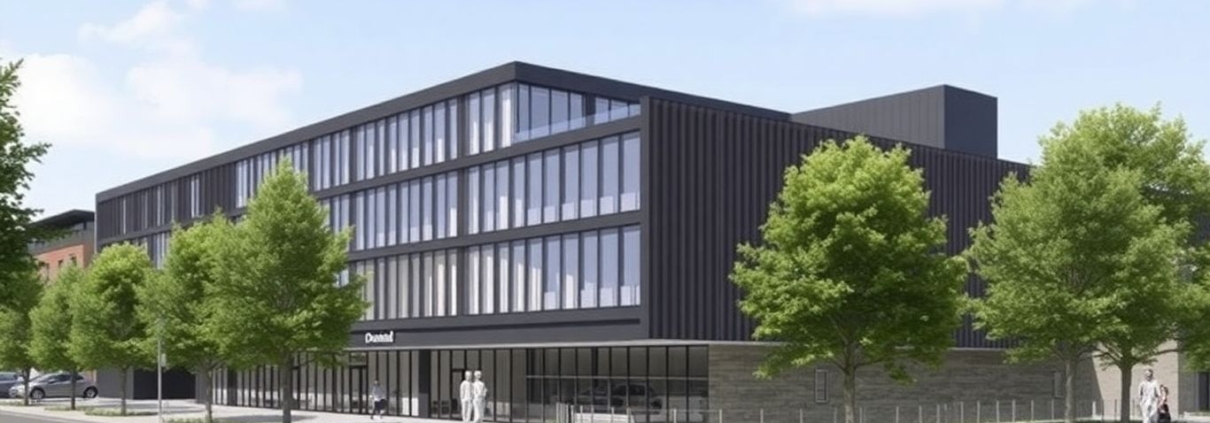
Modern architectural rendering of the Dunard Centre, Edinburgh.

Balfour Beatty Secures £162 Million Contract for Edinburgh’s New Dunard Centre

Balfour Beatty has been awarded a significant £162 million contract by IMPACT Scotland to construct the Dunard Centre, a state-of-the-art concert hall set to become Edinburgh’s first purpose-built music venue in over a century. The project, located behind St Andrew Square, promises to be a major cultural landmark.

Key Takeaways

  • Balfour Beatty appointed as main contractor for the £162 million Dunard Centre.
  • The venue will feature a 1,000-seat auditorium and house the Scottish Chamber Orchestra.
  • Construction is set to begin in the coming weeks, with completion anticipated in 2029.
  • The project aims to create new apprenticeship roles and support local SMEs.

A New Cultural Hub For Edinburgh

The Dunard Centre will boast a 1,000-seat auditorium, designed with world-class acoustics through the use of solid oak panelling internally. Beyond the main performance space, the venue will include a café, bar, and flexible areas suitable for a variety of events. A complex double-level in-situ concrete basement will accommodate performer facilities and essential back-of-house operations. The main structure will comprise a five-storey steel frame, clad in pre-cast concrete panels.

Project Development and Timeline

Balfour Beatty’s appointment follows an intensive 18-month early contractor involvement (ECI) phase. During this period, the company collaborated closely with IMPACT Scotland and the project team to address the complexities of building on a constrained city centre site, focusing on buildability and sequencing. Main construction is scheduled to commence in the coming weeks, with the project expected to be completed in 2029. At its peak, the construction site will employ approximately 200 operatives.

Previous Contractor and Funding

This project was previously slated for Sir Robert McAlpine, which had been involved in preconstruction work since 2019. However, that arrangement concluded in 2022 due to a revised design and procurement strategy. The project has also benefited from additional funding, including an in-principle pledge of £20 million from Scotland’s First Minister John Swinney, matched by US philanthropist Dr. Carol Colburn Grigor. The Dunard Centre is part of the Edinburgh & South East Scotland City Region Deal, with contributions from the Scottish and UK governments, and the City of Edinburgh Council, alongside significant private philanthropy.

Community and Economic Impact

Balfour Beatty is committed to creating at least five new apprenticeship roles and supporting ongoing SVQ Modern Apprenticeships, fostering skills development within the construction sector. A local supply chain strategy will prioritise Scottish small and medium-sized enterprises (SMEs), with 4D digital planning tools employed to optimise coordination and minimise disruption in the busy city centre. Once operational, the Dunard Centre is projected to attract around 200,000 visitors annually and will serve as the permanent home for the Scottish Chamber Orchestra and a key venue for the Edinburgh International Festival.

Sources

Modern university campus building with green surroundings.

Wolverhampton’s £61m City Learning Quarter Campus Officially Complete

Construction has officially concluded on Wolverhampton’s state-of-the-art £61 million City Learning Quarter college campus. The new facility, designed to significantly enhance education and skills within the city, has been handed over to City of Wolverhampton College. Students are set to begin using the modern campus from November 4th, marking a new era for learning in the heart of Wolverhampton.

Key Takeaways

  • The £61 million City Learning Quarter campus in Wolverhampton has completed construction.
  • City of Wolverhampton College has taken possession of the first, second, and third floors, along with the ground floor hair and beauty salon.
  • The campus will open its doors to students on November 4th.
  • The development is expected to boost city centre footfall by 4,500 people per week.
  • Over a ten-year period, approximately 45,000 people are projected to benefit from learning at the campus, with around 7,500 apprenticeships started.

A New Hub For Education And Skills

The City Learning Quarter, situated around the Old Hall Street and St George’s Parade area, incorporates the existing Metro One building and a new site on the corner of Garrick Street and Bilston Street. Councillor Chris Burden, City of Wolverhampton Council cabinet member for city development, jobs and skills, expressed his satisfaction with the project’s timely and on-budget completion. He highlighted the facility’s role in driving education and skills, unlocking opportunities for residents and visitors, and acting as a vital focal point for the city centre.

Diverse Educational Offerings

The new campus will provide a wide array of A Levels and vocational qualifications. These include courses in:

  • Art, Design and Photography
  • Business and Management
  • Catering and Hospitality
  • Computing and Digital
  • Creative Media, Games Design and E-sports
  • Hair and Beauty
  • Health and Social Care
  • Music Technology
  • Performing Arts
  • Science

A Collaborative Achievement

Louise Fall, principal and chief executive of City of Wolverhampton College, described the handover as “fantastic news” for current and future learners and staff. She thanked partners for their commitment and support in delivering the facility on schedule. Martin Keys, operational director at contractor McLaughlin & Harvey, praised the “exceptional collaboration” that led to the project’s successful completion, emphasizing its quality and potential to unlock significant opportunities for the community.

The first phase of the City Learning Quarter masterplan, an £8.1 million Advanced Technology and Automotive Centre at the college’s Wellington Road campus, opened to students in September 2024. The move to the new city centre location will also facilitate the redevelopment of the college’s former Paget Road site for much-needed housing.

Sources

Euston Station undergoing major renovation and upgrade works.

Euston Station Overhaul Sparks £300m Search for Design and Engineering Expertise

The Department for Transport has initiated a significant £300 million procurement process to find a design and engineering partner for the ambitious redevelopment of Euston Station and its surrounding mixed-use district. This move marks a crucial step in the long-awaited transformation of the vital London transport hub.

Key Takeaways

  • A £300 million hunt for a design and engineering partner has begun.
  • The project aims to create an integrated transport hub and unlock regeneration opportunities.
  • Market engagement for the £360 million deal starts in November.

A New Era for Euston Station

A newly established government-backed Euston Delivery Company will manage this five-year engineering design partner role. The scope of work encompasses the overhaul of the mainline station, crucial underground upgrades, and a substantial redevelopment of the railway land surrounding the site. This comprehensive approach aims to transform Euston into a fully integrated transport hub, unlocking multi-billion-pound regeneration potential for North London.

Partnering for a Cohesive Vision

The winning partner will be responsible for leading the design, masterplanning, cost control, and programme assurance for this complex undertaking. They will collaborate closely with Lendlease, the appointed master developer, and its architect, Allies & Morrison. The objective is to deliver a unified vision for the 60-acre campus, seamlessly connecting HS2, Network Rail, and Transport for London assets with new residential, office, and public spaces.

Requirements for Bidders

The Department for Transport is actively seeking firms with a demonstrable track record in delivering designs for complex, multi-modal transport infrastructure. Essential capabilities include the ability to translate early-stage designs into practical, buildable solutions while adhering to strict cost and programme parameters. The department is looking for innovative and experienced partners to bring this transformative project to fruition.

Procurement Timeline

Market engagement for the £360 million contract is scheduled to commence from mid to late November. Interested parties are required to register their interest via the Jaggaer portal by November 7th. The full contract notice is anticipated in May of next year, with the contract expected to commence in January 2027. While the wider scheme’s design and masterplanning are being procured, the detailed design and construction of the new HS2 station itself will be handled by a separate Private Finance Partner, subject to its own preliminary market engagement.

Sources